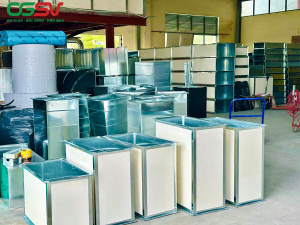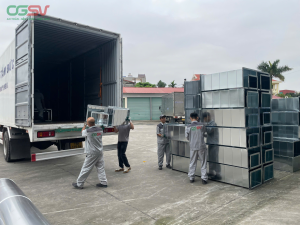
FIRE PROTECTION AIR DUCT – STEEL SHIELD
In the modern construction world, safety is always a top priority. When it comes to protecting buildings and people from the dangers of fire and explosion, there is a “silent hero” who is silently working 24/7 – the fire protection duct system. But did you know that not all ducts are born equal? Today, we will explore the secrets behind fire protection ducts – the ultimate weapon in the fight to protect lives and property.
1. Fire protection duct: Definition and importance
Fire protection ducts are an indispensable part of the fire protection system of every modern building. Unlike conventional ducts that simply carry air, fire protection ducts are specially designed to deal with fire situations. They not only help control smoke and heat, but also ensure a safe escape route for people in the building.
The importance of fire protection ducts is shown in many aspects:
– Prevent the spread of fire: By controlling the air flow, fire protection ducts can limit oxygen – the “food” of fire, thereby preventing the spread of fire.
– Create a safe escape route: In case of fire, fire protection ducts help to remove toxic smoke from important areas, creating conditions for people in the building to evacuate safely.
– Support fire fighting: Fire fighting duct system can be used to bring clean air into the fire area, helping fire fighting force work more effectively.
– Protecting the structure of the building: By controlling temperature and smoke, fire protection ducts help protect the structure of the building from the destruction of fire and heat.
.jpg)
2.1. “Immortal” materials
One of the most important factors that makes the difference between fire protection ducts and normal ducts is the manufacturing material. Fire protection ducts are made from materials that are extremely heat-resistant and fire-resistant, including:
– Stainless steel: With the ability to withstand heat up to 1400°C, stainless steel is the top choice for fire protection ducts in projects requiring high safety.
– Thick galvanized steel: This material not only has good corrosion resistance but can also withstand high temperatures, slowing the spread of fire.
Compared to conventional air ducts which are usually made of plastic or thin metal, fire protection air ducts with “armor” made of stainless steel or thick galvanized iron can withstand the terrible destruction of fire and heat for a long time.
2.2. “Superman” certificate
Not only are they made from special materials, fire protection ducts must also meet strict standards for fire resistance. Certifications such as EI45, EI60 are not just numbers, but a commitment to protection:

– EI30: Duct is capable of maintaining integrity (E) and insulation (I) for at least 30 minutes when exposed to fire.
– EI60: Higher level of protection, with resistance to fire and heat for at least 60 minutes.
These certifications ensure that the fire protection ductwork can maintain its function for a long enough period of time for building occupants to escape safely and for firefighters to access and control the fire.
2.3. “Smart” design
Fire protection ducts differ not only in materials and certifications, but also in the way they are designed. Some notable design features include:
– Special insulation layer: The inside of the fire protection duct is often equipped with an effective insulation layer, which helps prevent heat from spreading through the duct wall.
– Automatic opening and closing mechanism: Many fire protection duct systems are integrated with automatic opening and closing valves, capable of reacting quickly when detecting smoke or heat, preventing the spread of fire between areas.
– Anti-leakage design: The joints and structure of the fire protection duct are specially designed to ensure tightness, preventing smoke and toxic gases from escaping.
– High pressure resistance: In a fire situation, the pressure in the duct system can increase suddenly. Fire protection ducts are designed to withstand these pressure changes without deformation or rupture.
3. Diverse functions of fire protection ducts
Not simply a part of the ventilation system, fire protection ducts also play many important roles in ensuring the safety of the project:
3.1. Smoke control
In the event of a fire, toxic smoke is often more dangerous than the flames. Fire protection ducts play a key role in removing smoke from the fire area, helping to:
– Create clear vision for evacuees and rescuers.
– Reduces the risk of smoke inhalation for people in the building.
– Limit the spread of fire by controlling the airflow.
3.2. Provide clean air
In addition to smoke extraction, fire protection ducts also have the function of supplying clean air to safe areas, such as:
– Fire escape stairs: Maintain positive pressure in the stairs, preventing smoke from entering.
– Shelter area: Ensure clean air supply for people trapped in the building.
– Escape corridor: Create a safe environment for evacuation.
3.3. Fire fighting support
Fire protection duct system is also designed to support fire fighting:
– Smoke navigation: Helps firefighters locate the fire quickly.
– Heat control: Limits heat build-up in the fire area, reducing the risk of fire spreading and structural collapse.
– Facilitate access: By controlling smoke and heat, fire protection ducts help firefighters get closer to the heart of the fire.
4. Comparison of fire protection ducts and conventional ducts
To better understand the importance of fire protection ducts, let's compare them in detail with conventional ducts:
4.1. Materials
– Fire protection air duct: Stainless steel, thick galvanized iron, high heat resistance and fire resistance.
– Conventional air ducts: Usually made from aluminum, thin sheet metal, or synthetic materials, without special fire resistance.
4.2. Standards and certifications
– Fire protection ducts: Must meet strict fire protection standards such as EI30, EI60.
– Conventional ductwork: Usually only needs to meet basic standards for durability and ventilation performance.
4.3. Design and structure
– Fire protection air duct: Has a complex structure with insulation, automatic valve, anti-leakage design.
– Conventional air duct: Simple structure, mainly focusing on air conduction efficiency.
4.4. Functions
– Fire protection air duct: Multi-function – smoke control, clean air supply, fire fighting support.
– Conventional air ducts: Mainly serve the purpose of ventilation and air conditioning.
4.5. Heat resistance
– Fire protection duct: Can withstand extremely high temperatures (over 1000°C) for long periods of time.
– Conventional air ducts: Limited heat resistance, easily deformed or burned when exposed to high temperatures.
5. Fire protection duct installation and maintenance process
To ensure optimal performance, the installation and maintenance of fire protection ducts must comply with strict procedures:
– System design: Careful calculation of the size, location and capacity of the duct system is required to meet the requirements of the project.
– Material selection: Use standard materials with appropriate certificates.
– Construction: Ensure joints are tight and free of gaps that can reduce fire protection efficiency.
– Inspection: After installation, it is necessary to carefully check the tightness, pressure resistance and operation of the automatic valves.
5.2. Maintenance
– Periodic inspection: Regularly check the condition of the duct, especially the joints and automatic valves.
– Cleaning: Periodically clean the inside of the air duct to ensure optimal performance.
Contact us today for detailed advice on the most suitable fireproof duct solution for your project!
Contact now for advice:
- Mrs. Hang: 0985239838
- Mrs Giang: 0934559168
Address: 267 Le Thanh Tong, May Chai, Ngo Quyen, Hai Phong
Website: www.dieuhoasaoviet.vn
Home