During the design and construction of duct systems, material selection plays a crucial role, directly impacting durability, operational efficiency, and investment costs. Currently, the two most common materials used in duct systems are stainless steel and galvanized steel. So, which is the right choice for each project?
Ducting materials: An overview of stainless steel and galvanized steel.
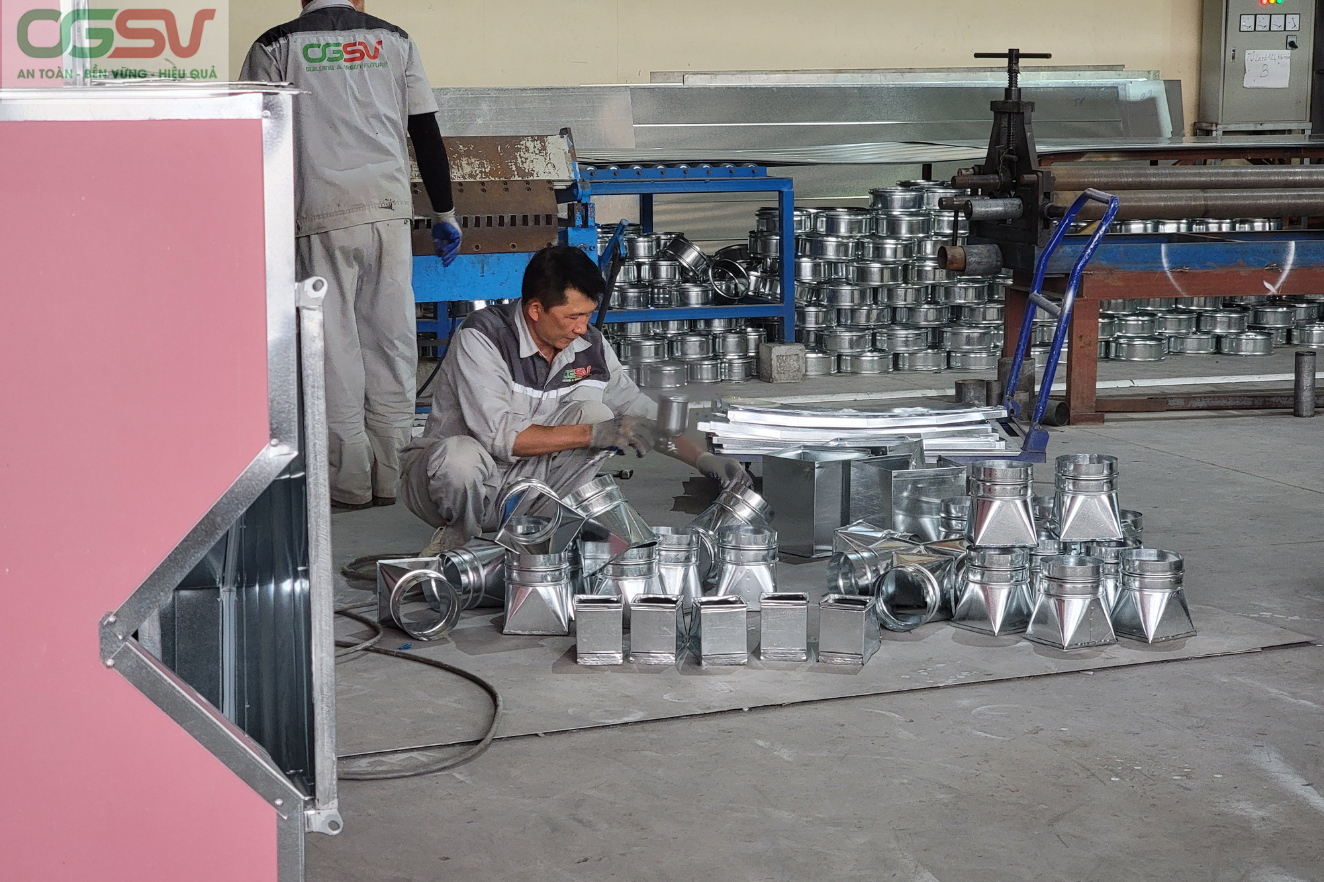
Stainless steel in duct systems
Stainless steel is a high-quality material, often used in constructions requiring high durability and hygiene standards.
Advantage:
- Excellent corrosion and rust resistance.
- Long life
- Easy to clean, safe to use.
- High aesthetics
Disadvantages:
- High cost
- The fabrication and construction are more complex.
Galvanized steel in air duct systems
Galvanized steel is the most common material used in ductwork systems today due to its reasonable cost.
Advantage:
- Low cost
- Easy to process, quick to install.
- Suitable for many types of construction projects.
- Lightweight
Disadvantages:
- Prone to corrosion over time.
- Less durable than stainless steel in harsh environments.
Comparison of stainless steel and galvanized steel in duct systems.
1. Durability and lifespan of the duct system
- Stainless steel: high durability, long lifespan.
- Galvanized steel sheets: average lifespan, depending on the environment.
If durability is a priority, stainless steel is the optimal choice for duct systems.
2. Cost of investing in a duct system
- Stainless steel: higher cost
- Galvanized steel sheets: cost-effective
With a limited budget, galvanized steel is a popular choice.
3. Environment in which the duct system is used
- Stainless steel: suitable for humid environments, chemical environments, and coastal areas.
- Galvanized steel: suitable for normal environments
In harsh environments, stainless steel helps duct systems operate more reliably.
4. Aesthetics and hygiene of the duct system
- Stainless steel: shiny, easy to clean.
- Galvanized steel: average aesthetics
For projects requiring high hygiene standards, stainless steel is the preferred choice.
When should stainless steel be chosen for duct systems?
You should use stainless steel when:
- This project belongs to the food and healthcare industries.
- High humidity or chemical environments
- Long lifespan requirement
- High standards of hygiene must be ensured.
When should galvanized steel sheets be chosen for duct systems?
Galvanized steel is suitable when:
- Limited budget
- Typical factory and workshop buildings
- No high requirements for corrosion resistance.
- Construction needs to be completed quickly.
What is the right material for your duct system?
In reality, there is no single best material for all situations. The choice depends on the intended use and the characteristics of the project.
Many construction companies now opt for a combined solution:
- Use stainless steel in special areas.
- Use galvanized steel sheets in general applications.
This solution optimizes both the cost and operational efficiency of the duct system.
Conclude
Choosing between stainless steel and galvanized steel for duct systems requires careful consideration of cost, environmental factors, and application requirements. Stainless steel stands out for its durability and corrosion resistance, while galvanized steel is more flexible and cost-effective.
To ensure long-term effectiveness, you should choose a professional design and construction company to receive advice on the most suitable solution for your building's duct system.