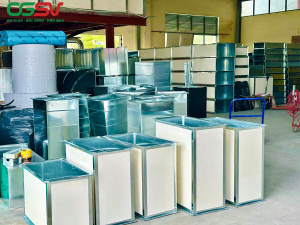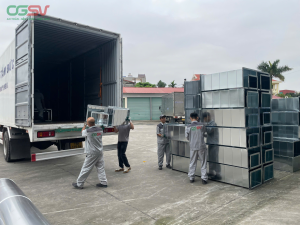
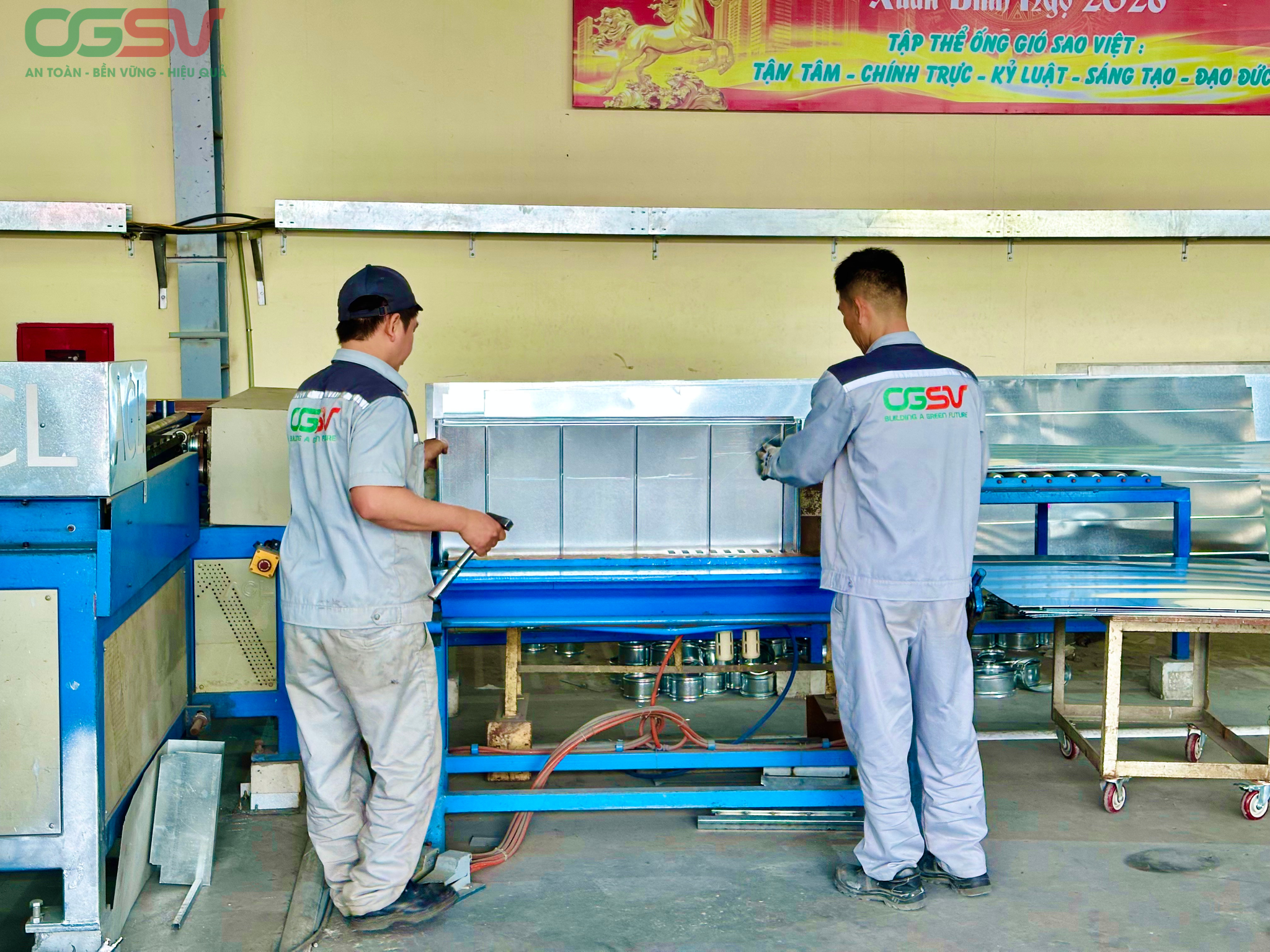
In the design and installation of building air conditioning and ventilation (HVAC) systems, determining thickness of sheet metal used for air ducts This is a crucial step. If the sheet metal is too thin, the ductwork will easily warp and buckle, causing significant noise when air pressure changes. Conversely, choosing sheet metal that is too thick will increase the load on the ceiling system and drive up material costs unnecessarily.
To solve this balancing problem, engineers must always adhere to systems. duct standards This article will provide a detailed update on the current regulations regarding the standard thickness of galvanized steel sheets used in the production of HVAC ductwork.
1. Common Duct Standards in the HVAC Industry
Currently in Vietnam, the selection of size and material thickness for air duct production is usually based on two core standards:
- SMACNA Standard (USA): The National Panel and Air Conditioning Contractors Association's standards. This is the most stringent, detailed, and widely applied set of regulations in high-end, foreign-funded projects.
- Vietnamese Standard TCVN 5687:2010: National standards for ventilation and air conditioning design clearly specify the minimum thickness of the sheet metal based on the largest side dimension of the duct.
2. Standard Sheet Metal Thickness for Square (Rectangular) Air Ducts
Square or rectangular ductwork is a product line that requires strict thickness control due to its flat walls, which are susceptible to deformation under climatic pressure.
According to standard HVAC specifications, the thickness of galvanized steel is classified based on the largest side dimension of the duct cross-section:
- Largest side < 300mm: The minimum sheet metal thickness is 0.48mm (usually 0.5mm thick sheet metal is used).
- The largest side measures from 300mm to 750mm: The required sheet metal thickness is 0.58mm (usually 0.6mm thick sheet metal is used).
- The largest side measures between 750mm and 1500mm: The required sheet metal thickness is 0.75mm (usually 0.75mm or 0.8mm thick sheet metal is used).
- The largest side measures between 1500mm and 2200mm: The required sheet metal thickness is 0.95mm (usually 1.0mm thick sheet metal is used).
- Largest side > 2200mm: The use of sheet metal with a thickness of from is mandatory. 1.15mm or thicker (usually 1.2mm thick steel) combined with reinforcing ribs.
3. Standard Thickness of Sheet Metal for Spiral Round Air Ducts
Thanks to its circular geometric structure combined with spiral ribs running along the pipe body, spiral round ducting has excellent mechanical strength. Therefore, with the same diameter size, spiral round ducting allows for various applications. thickness of sheet metal used for air ducts Thinner than square tubes while maintaining rigidity:
- Diameter (D) < 200mm: The sheet metal thickness only needs to be 0.48mm.
- Diameter (D) from 200mm to 500mm: Standard sheet metal thickness is 0.58mm.
- Diameter (D) from 500mm to 1000mm: Standard sheet metal thickness is 0.75mm.
- Diameter (D) from 1000mm to 1250mm: Standard sheet metal thickness is 0.95mm.
Summary Table of Galvanized Steel Sheet Thickness Specifications by Size
| Side Dimensions / Diameter (mm) | Standard Square Pipe Thickness (mm) | Standard Thickness of Spiral Round Tube (mm) |
| Under 300 | 0.5 | 0.5 |
| from 300 to 500 | 0.6 | 0.6 |
| from 500 to 750 | 0.6 | 0.75 |
| from 750 to 1000 | 0.75 | 0.75 |
| from 1000 to 1250 | 0.75 | 0.95 |
| Over 1500 | 1.0 – 1.2 | Custom design |
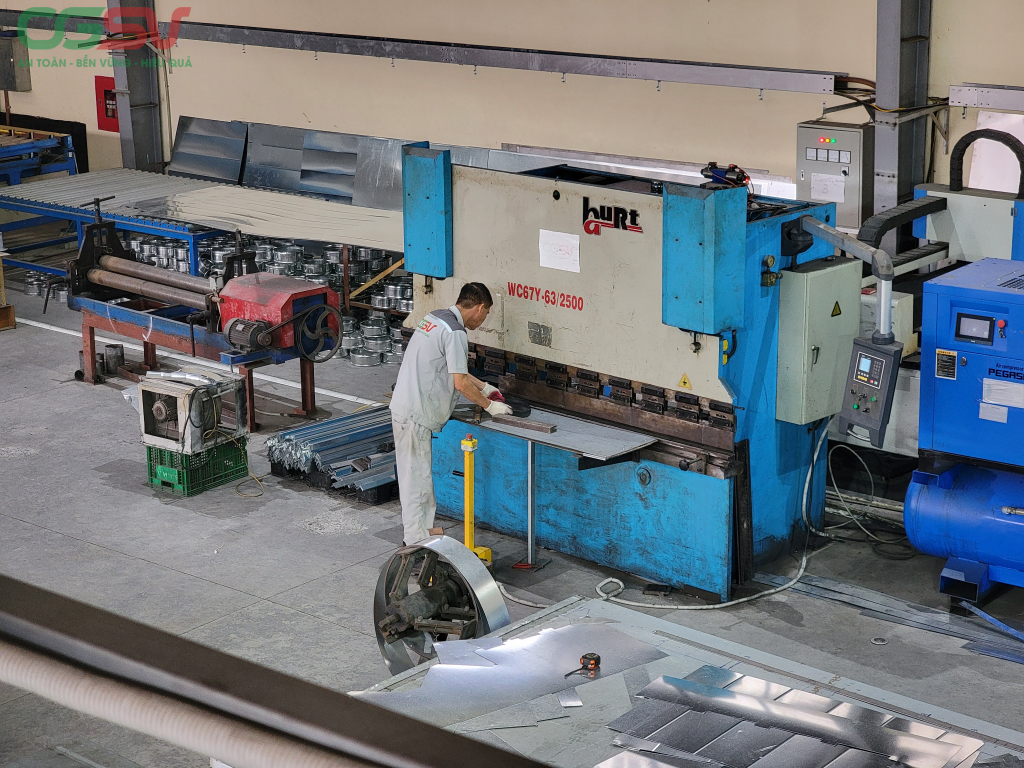
4. Important Notes Regarding Sheet Metal Thickness for Fire-Resistant Ducts (EI Ducts)
A particularly important point to note in current construction projects: For basement and corridor emergency smoke extraction systems, the use of... is mandatory. Fireproof duct (EI ductwork), the standard core sheet thickness is usually more stringent:
Technical specifications: To ensure that the fire-resistant coating or gypsum/MGO cladding adheres firmly and does not cause the pipe to collapse in the event of a fire, the minimum thickness of the galvanized steel core must be at least... 0.75mm to 1.15mm, Regardless of whether the pipe is large or small.
Conclusion
Comply strictly duct standards Material thickness is the golden key to ensuring safe operation of HVAC systems, preventing air leaks, and optimizing investment costs. At Sao Viet manufacturing plant, we are committed to using precisely measured galvanized steel sheets, accurately measured with digital equipment before processing, providing absolute confidence for all projects, large and small.
For expert advice on technical specifications or to receive the optimal material quotation for your project, contact our engineering team today!
If you are looking for a solution Fireproof duct For optimal solutions for your project, contact Sao Viet today to receive a quote and detailed technical advice!
>>> See more: About us and Sao Viet's profile.
Address: 267 Le Thanh Tong, May Chai, Hai Phong
Mrs. Hang: 0815.999.826
Mrs Giang: 0934.559.168
E-mail: vietonggio@gmail.com