In any living or working space, from a cozy family kitchen to large-scale industrial workshops, air quality is always a vital factor. We often invest heavily in modern kitchen exhaust fans or high-capacity industrial exhaust systems, but inadvertently overlook an equally important component: exhaust fan duct.
If the exhaust fan is the "heart" that creates thrust, then exhaust fan duct It is the “circulatory” system that determines the efficiency of air circulation. An expensive fan will become useless if it is connected to a pipe system that is not standard, leaky or obstructs the flow.
This in-depth article will give you the most comprehensive overview of exhaust fan duct, helping you understand clearly from structure, classification to selection and installation in the most optimal way, ensuring your space is always airy, clean and safe.
1. What is an exhaust fan ventilation duct and how does it work?
1.1. Basic Concepts
Exhaust fan ventilation duct It is a piping system (which can be flexible or rigid) specifically designed to connect to the inlet or outlet of various types of exhaust fans (kitchen exhaust fans, bathroom ventilation fans, industrial exhaust fans, etc.).
The main function of exhaust fan duct is to conduct polluted air flow, containing dust, smoke, odors, heat or toxic gases from inside the space to be treated to the outside environment (or through the filtration system). Conversely, in some fresh air supply systems, it also plays the role of conducting clean air from the outside.
1.2. Why is exhaust fan ventilation so important?
Many people mistakenly think that just cutting a hole in the wall and putting the fan in is enough. However, exhaust fan duct plays a decisive role in the actual performance of the fan for the following reasons:
-
Airflow direction: It ensures that the exhaust air is directed to the desired location, avoiding the phenomenon of exhaust air being recirculated back into the room or blown to the neighbor's house.
-
Maintain pressure: A system exhaust fan duct The fan's diameter and length should be calculated appropriately to help it operate at its designed capacity, maintaining the necessary pressure to push the air far away.
-
Noise reduction: Types exhaust fan duct High quality, especially insulated types, significantly reduce noise generated by high-speed air flow.
-
Protecting the living environment: Prevent the spread of bacteria, mold and odors throughout the building through unwanted gaps.
2. Detailed classification of the most common types of exhaust fan ventilation ducts
In the current market, reputable suppliers (for example, units specializing in refrigeration and electromechanical equipment like Sao Viet) often provide a variety of types of exhaust fan duct to serve different purposes. We can classify them based on material and structure.
2.1. Flexible Duct – Flexible solution
This is the type exhaust fan duct Most popular in light residential and commercial applications due to its high flexibility, ease of bending and installation in tight spaces such as drywall ceilings.
a. Uninsulated aluminum flexible duct (Silver pipe)
Type exhaust fan duct This is made from many layers of thin aluminum film pressed together, reinforced with spiral steel wires inside to form a round cylinder.
-
Advantage: Low cost, extremely light, easy to cut, bend according to terrain, withstand relatively high temperatures (about 100°C - 150°C).
-
Application: Most popular for home kitchen exhaust fans, bathroom exhaust fans, or small local ventilation systems.
b. Insulated Flexible Duct
Similar to uninsulated aluminum pipe, but the type exhaust fan duct This is covered with an additional layer of glasswool about 25mm thick in the middle and an outer silver shell.
-
Advantage: Better insulation and fire resistance. Most importantly, it has superior sound absorption and noise reduction when the air flow is strong.
-
Application: Used for central air conditioning systems, ventilation systems with high requirements on noise and temperature control (avoid condensation on pipes).
2.2. Rigid Duct – The choice for industry
For systems requiring high air flow, high pressure and permanent durability, exhaust fan duct A rigid form is the only option.
a. Galvanized Steel Duct
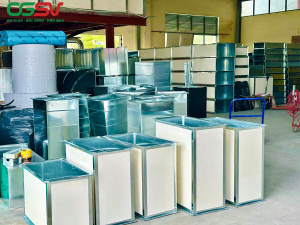
These are the “backbone” of industrial and large building ventilation systems. They are usually made into rectangular or spiral circular shapes (spiral ducts).
-
Advantage: Extremely high mechanical strength, withstands high wind pressure, excellent corrosion resistance thanks to zinc plating, lifespan of several decades. Smooth surface reduces airflow friction.
-
Disadvantages: Heavy, complicated to construct, requires connection accessories (cuffs, tees, valves...), higher cost than soft pipes.
-
Application: System exhaust fan duct for factories, basements, office buildings, fire prevention smoke extraction systems.
b. Stainless steel air ducts
Similar to galvanized steel pipe but made from stainless steel (usually 304 or 201 stainless steel). Type exhaust fan duct This is used in particularly harsh, highly corrosive environments such as chemical laboratories, food processing plants, or marine environments.
3. The "golden" criteria for choosing the right exhaust fan ventilation duct
Choosing the wrong type exhaust fan duct can cause your system to operate inefficiently or even damage your fan. Here are some key factors to consider:
3.1. Pipe size and diameter (Most important)
This is a vital factor. The diameter of the exhaust fan duct must be compatible with the fan output.
-
If the duct is too small: This will create a "bottleneck," increasing system resistance. The fan will have to work overtime, causing loud noise, overheating, and significantly reducing the airflow.
-
If the pipe is too large: It causes waste of material costs and unnecessary installation space, sometimes reducing the output wind speed, causing the exhaust gas not to be pushed far away.
Advice: Always check the exhaust fan specifications (e.g. Ø100, Ø125, Ø150mm for civil use; Ø200, Ø300mm or more for industrial use) to select the diameter. exhaust fan duct respectively.
3.2. Airflow and ambient temperature
You need to identify the airflow. exhaust fan duct What is the temperature?
-
If it is just for ventilation of bedroom or bathroom: Regular aluminum flexible duct is enough.
-
If it is an industrial kitchen hood or oven (high temperature, lots of grease): Use galvanized steel pipes or thick, heat-resistant flexible pipes to avoid the risk of fire or pipe melt.
3.3. Noise and insulation requirements
If the system exhaust fan duct When passing through quiet spaces (bedrooms, offices, false ceilings), you should prioritize insulated ducting to reduce noise from wind whistling and prevent condensation on the outside of the duct when carrying cold air, avoiding damage to the drywall ceiling.
3.4. Pipeline length and installation terrain
-
The pipeline is short and has many narrow bends: Exhaust fan ventilation duct Soft form is the optimal choice due to its ability to bend.
-
Long, straight pipelines requiring large flow: Rigid pipes (galvanized steel pipes) should be preferred to reduce friction and ensure that pressure does not drop too much along the way.
4. Various practical applications of exhaust fan ventilation ducts
Exhaust fan ventilation duct present everywhere, from the simplest applications to the most complex systems.
4.1. In residential spaces
-
Kitchen exhaust system: This is the most popular application. Exhaust fan ventilation duct (usually a soft silver pipe Ø110mm – Ø150mm) connects the hood to the outside environment, helping to remove smoke, food odors and heat from cooking.
-
Ventilation of toilets/bathrooms: Use ceiling or wall-mounted exhaust fans combined with flexible ductwork to remove moisture and odors, preventing mold growth.
-
Ventilation of enclosed rooms, bedrooms: Supply fresh air or exhaust air to rooms without windows.
4.2. In industry and commerce
-
Restaurants, hotels: System exhaust fan duct Large scale (usually using rigid corrugated iron pipes) to handle industrial kitchen smoke, ventilate lobbies, corridors and service areas.
-
Factory/Production facility: Positive pressure cooling ventilation system or local exhaust system at machines generating heat, dust, toxic chemicals. Exhaust fan ventilation duct here plays a role in ensuring labor safety.
-
High-rise buildings, apartment complexes: The system includes pressurized stairwells, smoke extraction from corridors in case of fire, and basement ventilation to remove vehicle exhaust fumes.
5. Basic technical instructions for installing exhaust fan ventilation pipes and notes
Installation exhaust fan duct Proper technique is key to ensuring the system operates smoothly. Below is the basic procedure (primarily applicable to domestic flexible hoses):
5.1. Preparation of materials
-
Exhaust fan ventilation duct Suitable (correct size and type).
-
Stainless steel cable ties (hose clamps) or specialized silver adhesive tape.
-
The vent cap has an insect screen at the outdoor outlet.
-
Drills, screwdrivers, wire cutters…
5.2. Steps to follow
Step 1: Determine the route and drill holes. Survey the shortest and least-bent route for the pipe to exit. Drill holes in the wall or cut in the drywall ceiling slightly larger than the pipe diameter.
Step 2: Connect the duct to the exhaust fan. Cage one end of exhaust fan duct Attach it to the fan's outlet. Use a stainless steel clamp to tighten it securely, ensuring an airtight seal and preventing it from coming loose when the fan is operating at high speed. If using a flexible duct, you can use additional aluminum foil tape for reinforcement.
Step 3: Pipe and fix Stretch exhaust fan duct (For flexible hoses) along the designated route. Try to keep the hose as straight as possible. Minimize sharp 90-degree bends; if bends are necessary, create a smooth curve. Use hangers or brackets to secure the hose to the ceiling or wall, preventing it from sagging and causing water accumulation or obstructing airflow.
Step 4: Install the outlet (Vent cap) At the outdoor outlet, install a rain cover (vent cap) with a mesh screen. Connect the other end of the exhaust fan duct Attach this cover and secure it tightly. The cover helps prevent rainwater from splashing in and keeps rodents and insects from getting into the pipes.
5.3. Important notes during construction
-
Absolutely not. Suddenly reducing the pipe diameter (for example, the fan outlet is 150mm but a 100mm pipe is used).
-
Stretch the hose: When using flexible ducting, stretch it as much as possible. Sagging or wrinkled ducting will increase friction and significantly reduce suction efficiency.
-
Leak test: After installation, turn on the fan and check the connections for air leaks. (System) exhaust fan duct It needs to be airtight to achieve optimal pressure.
6. Conclusion: Invest wisely in the "lungs" of the building.
Exhaust fan ventilation duct Although considered a secondary material, ducting plays a crucial role in determining air quality and comfort in your living and working spaces. Understanding the different types of ducting, choosing the right size, and adhering to proper installation techniques will help you create an efficient, durable, and energy-saving ventilation system.
Don't let an expensive exhaust fan go to waste because of a poor-quality piping system. Invest time in researching and choosing the right products. exhaust fan duct Consult with reputable and experienced air conditioning and ventilation suppliers (such as professional companies like Sao Viet) to receive the best solution for your project. A good ventilation system is an investment in long-term health and quality of life.
FAQ – Frequently Asked Questions about Exhaust Fan Ducts
1. Are PVC exhaust fan ducts any good? Rigid PVC pipes are commonly used for water lines and are not ideal for ventilation. They are heavy, difficult to install on ceilings, and importantly, are prone to aging, becoming brittle and breaking under high temperatures or sunlight. They should only be used in rare cases with very small fans.
2. Should you use rigid or flexible ducting for your home kitchen range hood? Flexible aluminum ducting (silver ducting) is the most popular choice because it's easy to install in kitchen cabinets and through narrow spaces. However, if the path is straight and long, using rigid galvanized sheet metal ducting will provide better and more durable odor removal, although it's more difficult to install.
3. How do I clean the exhaust fan's ventilation duct? With flexible ducts, cleaning the inside is difficult and often causes the duct to tear. The best solution after prolonged use (especially for kitchen exhausts with lots of grease) is to replace the duct with a new one. For rigid industrial ducts, professional cleaning using robots or specialized equipment is required for regular cleaning.
4. Where can I buy quality exhaust fan ducting? You should seek out reputable suppliers of refrigeration and electrical equipment. Specialized companies like onggiosaoviet.vn or dieuhoasaoviet.vn usually provide a full range of products from residential to industrial use with guaranteed quality and accurate technical advice.
CONTACT INFORMATION – SAO VIET AIR DUCT MANUFACTURING AND TRADING COMPANY LIMITED
-
Factory address: 267 Le Thanh Tong, May Chai, Ngo Quyen, Hai Phong
-
Hotline/Zalo:
-
Mrs. Hang: 0815.999.826
-
Mrs. Giang: 0934.559.168
-
Mrs. Linh: 0949.852.886
-
Tel: 0985.239.838
-
-
-
E-mail: vietonggio@gmail.com / dieuhoasaoviet@gmail.com
-
Website: onggiosaoviet.vn - dieuhoasaoviet.vn
Let Sao Viet Air Ducts be your partner in creating healthy and safe living spaces!