In the context of strong development of industrial and civil construction, the requirement for air quality inside buildings is becoming more and more urgent. The ventilation and air conditioning (HVAC) system plays the role of the "lungs" of the building, and for this system to operate effectively, the choice of duct material is a key factor. Among the existing materials, galvanized steel ductwork is holding a unique position, becoming the first choice of engineers and contractors thanks to the perfect balance between durability, cost and technical features.
This article will delve into a comprehensive analysis of galvanized steel ductwork, from basic structure, popular classifications on the market, strict technical standards to diverse practical applications. Whether you are an investor looking for a solution for a project or a mechanical engineer wanting to update his knowledge, the information below will provide the most in-depth insight into this essential material.
1. Overview: What is galvanized steel ductwork?
Basically, galvanized steel ductwork is a type of air duct processed from the main material of steel sheet. The special feature is that the surface of this sheet is coated with a layer of zinc (Zn) through the hot-dip galvanizing or electroplating process. This zinc coating is not only a decorative "coat" but also plays the role of an extremely important sacrificial protective layer.
In the air environment, zinc will react with oxygen, water and carbon dioxide to form a stable layer of zinc carbonate (ZnCO3). This film prevents oxidation deep into the steel base layer, helping the duct to effectively resist rust and corrosion. Thanks to this property, galvanized steel ductwork has a much longer life than conventional black steel pipes, especially in the hot and humid climate of Vietnam.
This product is an indispensable component in ventilation systems, with the function of circulating air flow, supplying fresh air, exhausting exhaust air, removing dust, odors and controlling temperature and humidity in closed spaces such as factories, office buildings, shopping centers or industrial kitchens. The popularity of galvanized steel ductwork comes from the ability to meet the strict technical requirements of the HVAC system at an extremely reasonable investment cost.
2. Classification of common types of galvanized steel ductwork
To meet the diverse requirements of architectural design, installation space and air flow of each project, galvanized steel ductwork are manufactured in many different shapes. The two most popular and dominant types on the market today are square ducts and round ducts.
2.1. Square galvanized steel duct (Rectangular Duct)
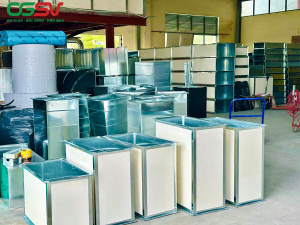
This is the type galvanized steel ductwork have a rectangular or square cross section. They are extremely widely used in most civil and industrial constructions.
-
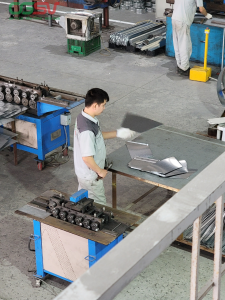
Structural features: Processed from flat galvanized sheet, through cutting, bending, seaming and flaring stages. Pipe sections are usually connected together by TDC flanges (Transverse Duct Connector), V flanges, or C-clamps, helping to create a solid and tight system.
-
Advantage: The biggest advantage of square ductwork is the ability to maximize the installation space, especially in areas with low ceilings or narrow spaces on false ceilings. The square cross-section allows for the transmission of large air flows at lower speeds than round ducts of the same area, helping to reduce noise.
-
Application: Often used as main pipes in cold air and fresh air supply systems for high-rise buildings, or corridor smoke exhaust systems, industrial kitchen exhaust systems where neat installation space is required.
2.2. Round galvanized steel duct
Galvanized steel ductwork Round ducts are divided into two smaller types: smooth round ducts and spiral ducts, of which spiral ducts are increasingly popular.
-
Smooth round duct: Rolled from sheet metal and welded along the length of the pipe. Usually used for small sizes or special applications.
-
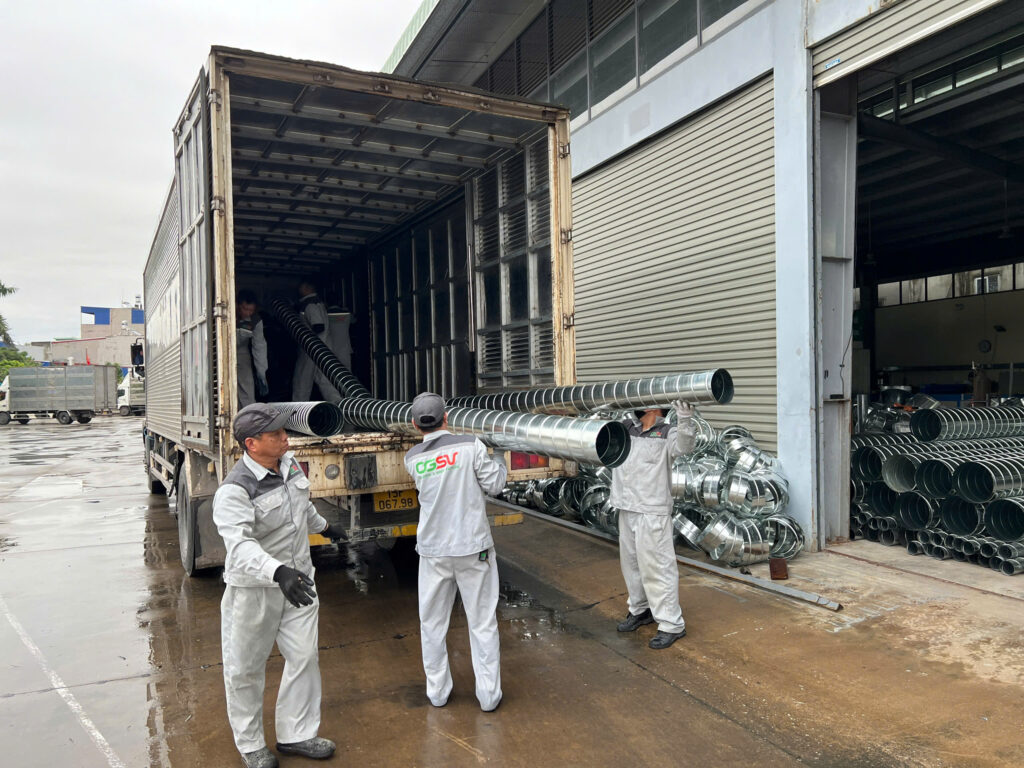
Spiral Duct: This type of pipe is produced by spiral winding technology from a narrow strip of galvanized iron. The spiral ribs running along the pipe body not only create a distinctive aesthetic but also significantly increase the stiffness of the pipe wall.
-
Outstanding advantages: Thanks to the spiral structure, galvanized steel ductwork Spiral round pipes can withstand higher working pressure than square or smooth round pipes of the same thickness. The air flow moving in the round pipe also has less frictional pressure loss, helping to save energy for the blower. In addition, the length of spiral round pipes can be produced continuously (usually 3m - 4m or longer depending on transportation requirements), helping to reduce the number of joints, increase tightness and reduce the cost of accessories and installation labor.
-
Application: Very suitable for systems requiring high wind speed, dust extraction systems, exhaust air extraction systems in factories, or buildings with open ceiling spaces that require high aesthetics, where air ducts are left exposed as part of the interior design.
-
3. Technical standards and thickness of galvanized ventilation pipes
The quality of a ventilation system depends largely on compliance with technical standards during the ductwork manufacturing process. The thickness of galvanized sheet is the most important factor determining the durability, pressure resistance and vibration resistance of the ductwork.
In Vietnam, production galvanized steel ductwork usually follow standards such as TCVN (Vietnam Standards), or equivalent international standards such as SMACNA (Sheet Metal and Air Conditioning Contractors' National Association - USA) or DW144 (UK).
The thickness of galvanized sheet metal used for ductwork is not fixed but varies depending on the cross-sectional size of the duct (largest side for square ducts or diameter for round ducts) and the working pressure of the system.
Below is a reference table of common galvanized steel thicknesses for air ducts (based on popular standards):
| Maximum side dimension / Pipe diameter (mm) | Recommended minimum galvanized sheet thickness (mm) |
| Under 300 | 0.48 – 0.58 |
| From 300 to under 750 | 0.58 – 0.75 |
| From 750 to under 1200 | 0.75 – 0.95 |
| From 1200 to under 2000 | 0.95 – 1.15 |
| Over 2000 | 1.15 – 1.5 (or additional reinforcement required) |
Note: This is a general reference table only. Actual thickness should be calculated by the design engineer based on the specific pressure of each project.
Reputable manufacturing units, for example, factories in the Hai Phong area with modern production lines, often use high-quality galvanized steel sheets from major brands (such as Hoa Sen, Phuong Nam...) with standard zinc coating (usually Z8, Z10, Z12... indicating the amount of zinc plated on the surface), ensuring galvanized steel ductwork The finished product has the best corrosion resistance over time.
4. Outstanding advantages help galvanized steel ducts lead the market
It is not by chance that galvanized steel ductwork become the “king” in the field of ventilation materials. This dominance comes from a series of outstanding advantages that are difficult for any other material to compare in the same price segment.
4.1. High durability and impressive corrosion resistance
As analyzed in the beginning, the galvanized layer plays a role in protecting the internal steel reinforcement from environmental factors. This helps galvanized steel ductwork can operate durably for decades in normal environments. Even in harsher environments such as humid air near the sea, or light industrial environments, this type of duct still shows much better resistance than unprotected black steel.
4.2. Optimizing investment and operating costs
This is the factor that determines the popularity of the product. Compared with stainless steel ducts, they have better corrosion resistance but the price is very high, galvanized steel ductwork has a much more reasonable price, suitable for the budget of the majority of projects. Compared with PVC pipes or composite pipes, galvanized steel pipes have better hardness, heat resistance and fire resistance.
Furthermore, thanks to the smooth surface (especially the spiral round tube), galvanized steel ductwork Helps reduce airflow friction, thereby reducing the required fan power, helping to save electricity costs for operating the HVAC system in the long term.
4.3. Modern industrial aesthetics
The characteristic shiny surface of the zinc layer, combined with the stiffening ribs (on square tubes) or regular spirals (on round tubes) creates an industrial, modern and professional beauty. Many office buildings, cafes, restaurants in the "Industrial" style today choose to install the system galvanized steel ductwork exposed, turning it into a unique architectural highlight instead of having to be hidden on the plaster ceiling.
4.4. Easy to process, install and maintain
Galvanized steel is flexible and easy to cut, bend, and shape. This allows manufacturers to easily produce ducts with complex sizes and shapes, along with a variety of accessories such as elbows, tees, forks, reducers, etc. to suit all installation terrains.
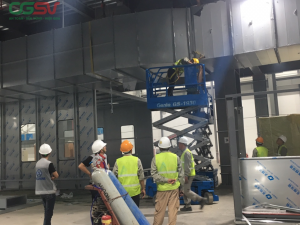
Construction and installation galvanized steel ductwork It is also relatively convenient at the construction site thanks to its moderate weight (lighter than cast steel pipes) and standardized connection methods (flanges, sleeves). The smooth surface also makes cleaning and periodic maintenance of the pipeline easier, ensuring the best air quality.
5. Diverse applications in practice
Thanks to its superior technical features, galvanized steel ductwork present in most construction categories:
-
Central air conditioning system (HVAC): Used as cold air supply pipes and return air pipes for office buildings, hotels, and shopping centers, ensuring even temperature distribution.
-
Industrial factory ventilation system: Supply fresh air and exhaust hot air and dust out of the production area, improving the working environment for workers. Especially in large industrial zones in Hai Phong, Bac Ninh, Binh Duong, the need to use galvanized steel ductwork is extremely large.
-
Kitchen exhaust and odor treatment system: Used in restaurants, hotels, industrial kitchens to extract smoke, heat and food odors, leading them to a treatment area before releasing them into the environment.
-
Fire protection system (Fire prevention and fighting): Used as a corridor smoke exhaust system, stairwell pressurization system, helping to ensure safe escape in case of fire or explosion. In this application, the duct is often covered with additional layers of specialized fireproof materials.
6. Conclusion
Galvanized steel ductwork has been asserting its position as an irreplaceable component in the technical infrastructure of modern works. The perfect combination of durability, economy, flexible technical response and aesthetics has made it the number one choice for ventilation and air conditioning systems.
Understanding the characteristics, classification and technical standards of galvanized steel ductwork will help investors and engineers make informed decisions, choosing quality products from reputable manufacturers with experience and modern technological lines (such as professional units in key industrial areas such as Hai Phong). A quality duct system not only ensures the performance of the entire building but is also a smart investment, bringing long-term sustainable value.