In the context of rapid urbanization and industrialization, the demand for air quality inside high-rise buildings, factories, and commercial centers is becoming increasingly urgent. The ventilation and air conditioning (HVAC) system plays the role of the "lungs" of the building, and the most important component, acting as the blood vessels that carry that air flow, is the ventilation pipesThis article will delve into a comprehensive analysis of ventilation pipes, from technical specifications, classification, benefits to practical applications, helping investors and contractors have the most accurate view when choosing solutions for their projects.
1. What is a Ventilation Duct? Its Core Role in the HVAC System
Ventilation pipes is a piping system mainly processed from galvanized iron, with the main function of transporting and distributing fresh air from outside to inside the space, while collecting and discharging polluted air, dust, hot air or toxic gases into the outside environment.
This is an indispensable part of any HVAC system, from central air conditioning, factory cooling systems, to emergency smoke extraction systems, industrial kitchen exhaust systems or basement ventilation. Quality of the system ventilation pipes directly affects the performance of the entire air conditioning system, energy consumption and most importantly the health of building occupants.
The corrugated iron materials used are often high-quality galvanized iron from reputable brands such as Hoa Sen and Hoa Phat, with standard zinc coating thickness (for example, Z080 standard), ensuring corrosion resistance and high durability in hot and humid climates.
2. Why is Galvanized Ventilation Duct the Top Choice?
Although there are many different materials for making air ducts such as stainless steel, aluminum, or fabric, ventilation pipes Galvanizing is still the most popular choice, occupying an overwhelming market share thanks to its outstanding technical and economic advantages:
2.1. High Strength and Good Corrosion Resistance
The galvanized layer on the surface of the corrugated iron acts as a solid protective layer, preventing oxidation and rust. Under normal indoor environmental conditions, the life of the corrugated iron ventilation pipes can last up to 20 years, and about 15 years for outdoor environments. This helps to reduce long-term maintenance and replacement costs for investors.
2.2. Reasonable Cost and Economic Efficiency
Compared with stainless steel ducts (which are much more expensive and more difficult to construct), ventilation pipes Galvanizing has significantly lower material and processing costs. It is the perfect balance between technical performance and investment budget, especially suitable for large-scale projects such as factories or office buildings.
2.3. Aesthetics and Easy Cleaning
Surface ventilation pipes has the characteristic shine of zinc, bringing an industrial, modern beauty to buildings with open ceiling designs. Moreover, the smooth surface helps limit dust and mold, convenient for periodic cleaning and maintenance, ensuring clean air quality.
2.4. Load-bearing Capacity and Ease of Construction
Corrugated iron material has a certain degree of rigidity, helping the duct system withstand high wind pressure without deformation. At the same time, the weight of ventilation pipes Lighter than black steel pipes or composite pipes, making transportation, lifting and installation at high altitudes easier and faster, shortening construction progress.
3. Classification of Common Types of Ventilation Ducts
Based on cross-sectional shape and machining method, ventilation pipes divided into two main types, each with its own advantages and disadvantages suitable for specific installation conditions.
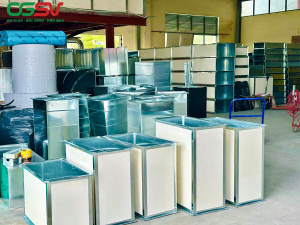
3.1. Square (and Rectangular) Ventilation Ducts
This is the traditional and most widely used type of ductwork.
-
Characteristic: Square or rectangular cross section. Common thickness ranges from 0.5mm to 1.2mm depending on the large side of the pipe and the pressure requirements of the system. Manufactured in accordance with international standards such as SMACNA.
-
Advantage: Make the most of the space on the ceiling, especially in areas with limited height. Easily combined with accessories such as air vents, air valves, air boxes. The process of insulation for ventilation pipes Square is also simpler and flatter.
-
Application: Often seen in central air conditioning systems of office buildings, hotels, shopping malls, where false ceiling space needs to be optimized.
3.2. Spiral Duct
This type of pipe is increasingly popular due to its aesthetics and high aerodynamic performance.
-
Characteristic: Processed by spiral winding machine from galvanized steel strip, creating reinforcing ribs running along the pipe body. Pipe diameter can be from very small (D100) to very large (usually maximum about D1000 to ensure quality).
-
Advantage:
-
Best airflow performance: The circular cross section reduces friction and pressure loss, allowing air to travel faster and farther with less energy consumed.
-
High rigidity: The spiral structure increases load-bearing capacity, allowing the use of thinner sheet metal than square tubes of the same cross-section while still ensuring stiffness, helping to reduce weight and cost.
-
High airtightness: The spiral joints are very tight, minimizing air leakage and improving system efficiency.
-
Aesthetics: Well suited for exposed piping designs.
-
-
Disadvantages: Requires larger installation space than square ducts (due to the inability to utilize corners). Connection to square/rectangular air vents requires additional conversion accessories (square-round reducers).
4. Production Process and Quality Standards
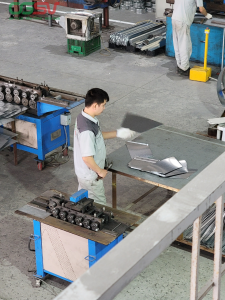
To ensure a system ventilation pipes To operate effectively, the production process must strictly comply with technical standards. Reputable manufacturing units today (such as the factories mentioned in the data source) often apply modern CNC technology to ensure the highest accuracy.
The basic production steps include:
-
Prepare ingredients: Use galvanized steel coils with appropriate thickness and width (for example: thickness 0.48, 0.58, 0.75, 0.95, 1.15mm).
-
Feeding and straightening: The coil is fed into the machine and flattened.
-
Cutting and corrugating (for square pipes): The CNC machine will cut the sheet metal according to the drawing size and roll the stiffener (if necessary) to increase the durability of the pipe wall.
-
Create seams and fold tubes: Create seam types (such as Pittsburgh seams, Snap-lock seams) and fold the sheet metal into a square tube shape.
-
Stitching and sealing: Use a specialized seaming machine to seal the pipe. The corner seams are usually filled with specialized silicone to ensure absolute airtightness and prevent pressure leakage.
-
Accessories processing: Important accessories such as reducers (help connect pipes of different sizes, optimize flow), elbows (90 degree, 45 degree elbows), tees, and forks are precisely machined to ensure system synchronization.
The SMACNA (Sheet Metal and Air Conditioning Contractors' National Association) standard is commonly used as a measure of manufacturing quality. ventilation pipes, clearly specifying the thickness of sheet metal corresponding to the pipe size and working pressure, as well as the stiffener and support specifications.
5. Diverse Applications of Ventilation Ducts in Practice
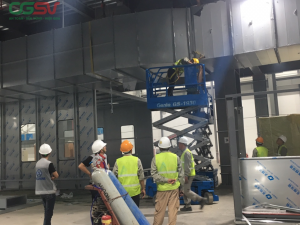
System ventilation pipes is an inseparable part of technical infrastructure in most modern construction projects:
-
Central air conditioning system (HVAC): Used as cold air supply and hot air return pipes for high-rise buildings, offices, and shopping centers.
-
Industrial factory ventilation: Supply fresh air and exhaust exhaust, dust, and heat from machines in production lines, ensuring a safe working environment for workers.
-
Emergency smoke extraction and stair pressurization system: This is an important application related to fire safety. Ventilation pipes (usually combined with EI fireproof cladding) helps to remove toxic smoke from the corridor in case of fire and supply clean air to the fire escape.
-
Basement ventilation: Eliminates toxic gases from vehicle exhaust (NO, CO2, SO2) accumulated in the basement parking lot, minimizing the risk of fire and explosion and ensuring fresh air.
-
Industrial kitchen exhaust system: Used in restaurants and hotels to remove smoke, grease and food odors from the kitchen area.
6. Important Notes When Choosing and Installing Duct Systems
To the system ventilation pipes To maximize efficiency, investors should note:
-
Accurate design calculations: Calculation of air flow and head loss must be done by qualified engineers to select the appropriate pipe size. Pipes that are too small cause noise and waste fan energy, pipes that are too large cause waste of cost and space.
-
Choose the appropriate thickness of corrugated iron: Comply with SMACNA standards on sheet metal thickness based on the largest edge of the pipe to avoid vibration and noise when the system is operating (for example: pipes with edges under 450mm usually use 0.58mm sheet metal; edges from 450-750mm use 0.75mm sheet metal...).
-
Ensure airtightness: Flange joints and seams must be carefully treated with gaskets and silicone glue to avoid air leakage, causing loss of cold/hot energy.
-
Priority is given to units with actual measurement services: As information from reputable suppliers (for example: Sao Viet Air Duct), direct measurement at the construction site before production will help optimize volume, reduce material loss and shorten installation time at the construction site.
Conclude
Ventilation pipes Galvanized pipes have been asserting their position as the number one solution for ventilation systems in construction projects thanks to the perfect balance between durability, technical performance and investment costs. From flexible square pipes in narrow ceiling spaces to aesthetic spiral round pipes with optimal air flow performance, choosing the right type of pipe, the right thickness and manufactured and installed according to international standards is the key to ensuring a clean, safe and energy-saving air environment for your project. Invest in a system ventilation pipes Quality from the start is a smart investment for sustainable operations in the future.
CONTACT INFORMATION – SAO VIET AIR DUCT MANUFACTURING AND TRADING COMPANY LIMITED
-
Factory address: 267 Le Thanh Tong, May Chai, Ngo Quyen, Hai Phong
-
Hotline/Zalo:
-
Mrs. Hang: 0815.999.826
-
Mrs. Giang: 0934.559.168
-
Mrs. Linh: 0949.852.886
-
Tel: 0985.239.838
-
-
-
E-mail: vietonggio@gmail.com / dieuhoasaoviet@gmail.com
-
Website: onggiosaoviet.vn - dieuhoasaoviet.vn
Let Sao Viet Air Ducts be your partner in creating healthy and safe living spaces!