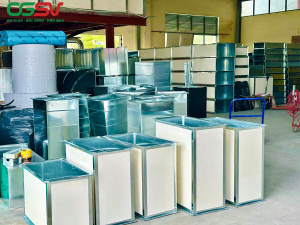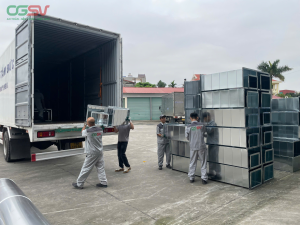
Ventilation systems are considered the "lungs" of any building, from manufacturing plants to high-rise office buildings. An efficient system not only provides fresh air and protects the health of users but also optimizes energy consumption. However, the quality of the air ducts – a core factor determining the efficiency of the entire system – is often overlooked during the delivery and installation process.
Don't let small installation errors become major operational problems. With years of experience in the manufacturing and distribution of HVAC systems, Sao Viet would like to share 5 steps to check the quality of your ductwork right at the construction site to help you ensure your system always operates optimally and sustainably.
Step 1: Check materials and quality certificates
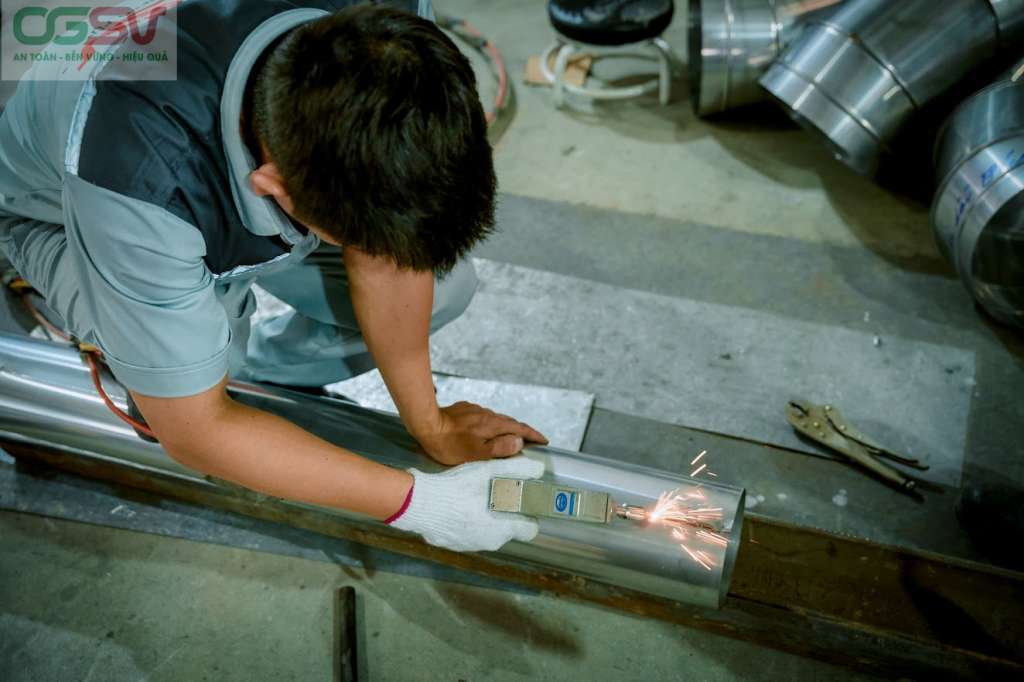
On-site material handling should begin with a thorough inspection of ductwork materials such as galvanized steel and stainless steel, comparing them directly with the approved design documents. The supervisor must ensure that the material surfaces are free from dents or deep scratches that could damage the protective coating.
In particular, checking the quality certificates (CO, CQ) to verify origin is mandatory. For standard fire-resistant ducting systems such as EI30 and EI45, accompanying fire safety inspection documents are required. When choosing products from reputable suppliers like Sao Viet, all these certificates are provided fully and transparently.
Step 2: Check the dimensions and geometric shape.
Use specialized measuring equipment such as steel tapes or laser rulers to remeasure the dimensions, including the length, width, or diameter of the air ducts and accessories such as square elbows, tees, and reducers.
All deviations must be within the permissible tolerance range of the construction standard. For spiral round ducts, attention should be paid to checking the uniformity of the cross-section and the pitch spacing to ensure that the airflow will not be obstructed later.
Step 3: Check the joints and ensure they are airtight.
The tightness of the piping system determines its ability to maintain pressure and prevent airflow loss. Flange joints, clamps, and intermediate connections should be carefully inspected.
The bolts must be tightened evenly, and the joints must be sealed with rubber gaskets or specialized silicone sealant to prevent air leaks. For square ducts, inspectors need to assess the perpendicularity of the flange edges to avoid bending the duct when connecting long sections.
Step 4: Inspect the surface and protective coating.
Standard duct surfaces must have a galvanized or stainless steel finish that is bright, uniform, and flawless. Improper storage at the construction site can easily lead to water accumulation in the ducts, resulting in mold or premature rusting.
Sections of pipe with severely damaged coatings should be removed immediately to avoid the risk of localized corrosion due to weather and chemical environments in factories.
Step 5: Conduct a trial run.
If site conditions permit, before applying insulation or installing ceilings, the contractor should conduct a test run of the fan and piping system.
The purpose is to conduct preliminary measurements of airflow and static pressure at the air vents and to detect any unusual noise or strong vibrations caused by unstable suspension rods or brackets, so that adjustments can be made promptly.
Conclusion and Contact Us for a Quote on Sao Viet Ducting
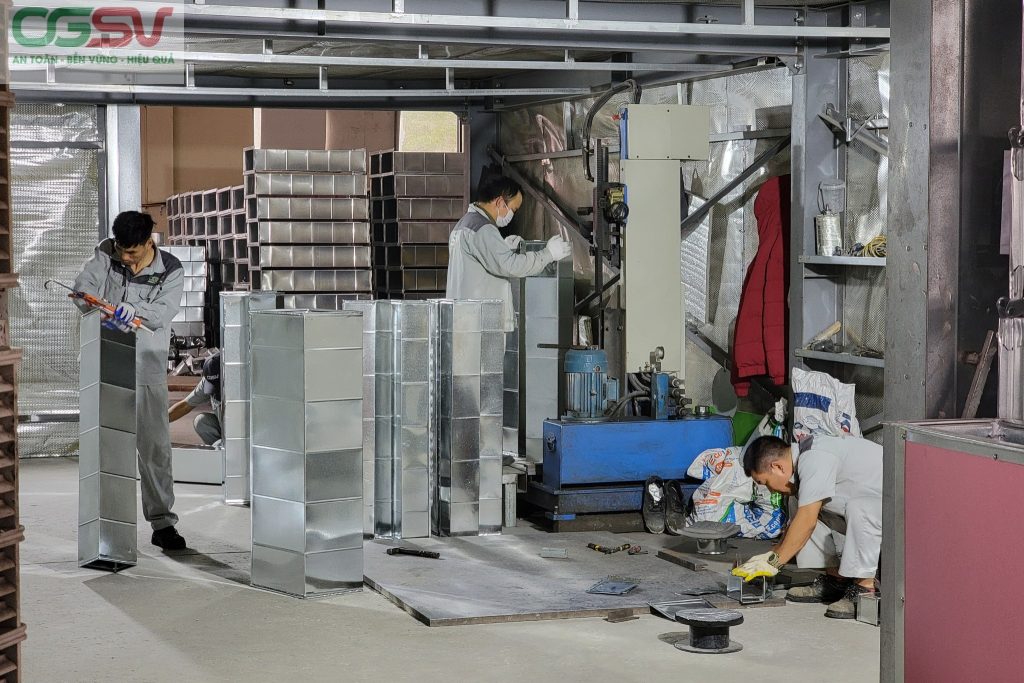
Strictly implementing the above five inspection steps will help investors and contractors effectively control the quality of construction right from the start. With modern production capabilities and a rigorous quality control process, Sao Viet is committed to providing ductwork products that meet the highest technical standards.
>>> See more: Get free technical advice and a quote!
If you are looking for a reliable ducting supplier that guarantees safety, durability, and efficiency for your project in Hai Phong and surrounding provinces, please contact us immediately:
Address: 267 Le Thanh Tong, May Chai, Hai Phong
Mrs. Hang: 0815.999.826
Mrs Giang: 0934.559.168
E-mail: vietonggio@gmail.com