In HVAC systems, determining the correct spacing for duct support brackets according to technical standards is crucial for ensuring durability, safety, and operational efficiency. Incorrect spacing can lead to sagging, vibration, or reduced lifespan of the duct system. So, what are the standard spacing requirements for duct support brackets? Let's explore this in detail in the article below.
Why is it necessary to adhere to the correct spacing for duct support brackets?
The spacing between duct supports not only affects the structure but also directly impacts the operational efficiency of the ventilation system.
Benefits of proper installation:
- Reduces sagging and bending of air ducts.
- Reduce vibration and noise.
- Increase system durability and lifespan.
- Ensuring safety during operation.
Conversely, if the distance is too great, the ductwork is prone to deformation; if it is too close, it will lead to wasted materials and construction costs.
Standard spacing for hanging duct supports
The spacing of the support brackets depends on the type of duct (square, round), material, and size. Below are common standards applied in practice:
1. For square (or rectangular) ductwork
- Side ≤ 400 mm: hanging distance from 2.5 – 3 m
- Side length from 400 – 1250 mm: distance 2 – 2.5 m
- Side ≥ 1250 mm: maximum distance 1.5 – 2 m
Note: For larger pipes, additional supports are needed to prevent sagging.
2. For round ducts
- Diameter ≤ 400 mm: distance 3 – 4 m
- Diameter from 400 – 1000 mm: distance 2.5 – 3 m
- Diameter ≥ 1000 mm: distance 2 – 2.5 m
Round ducts generally have better rigidity, so the suspension distance can be greater compared to square ducts.
3. According to duct material
- Galvanized steel pipes: Commonly applied, according to the above standards.
- Stainless steel duct: The distance may be reduced due to the greater weight.
- Flexible duct: shorter suspension distance, usually ≤ 1.5 m
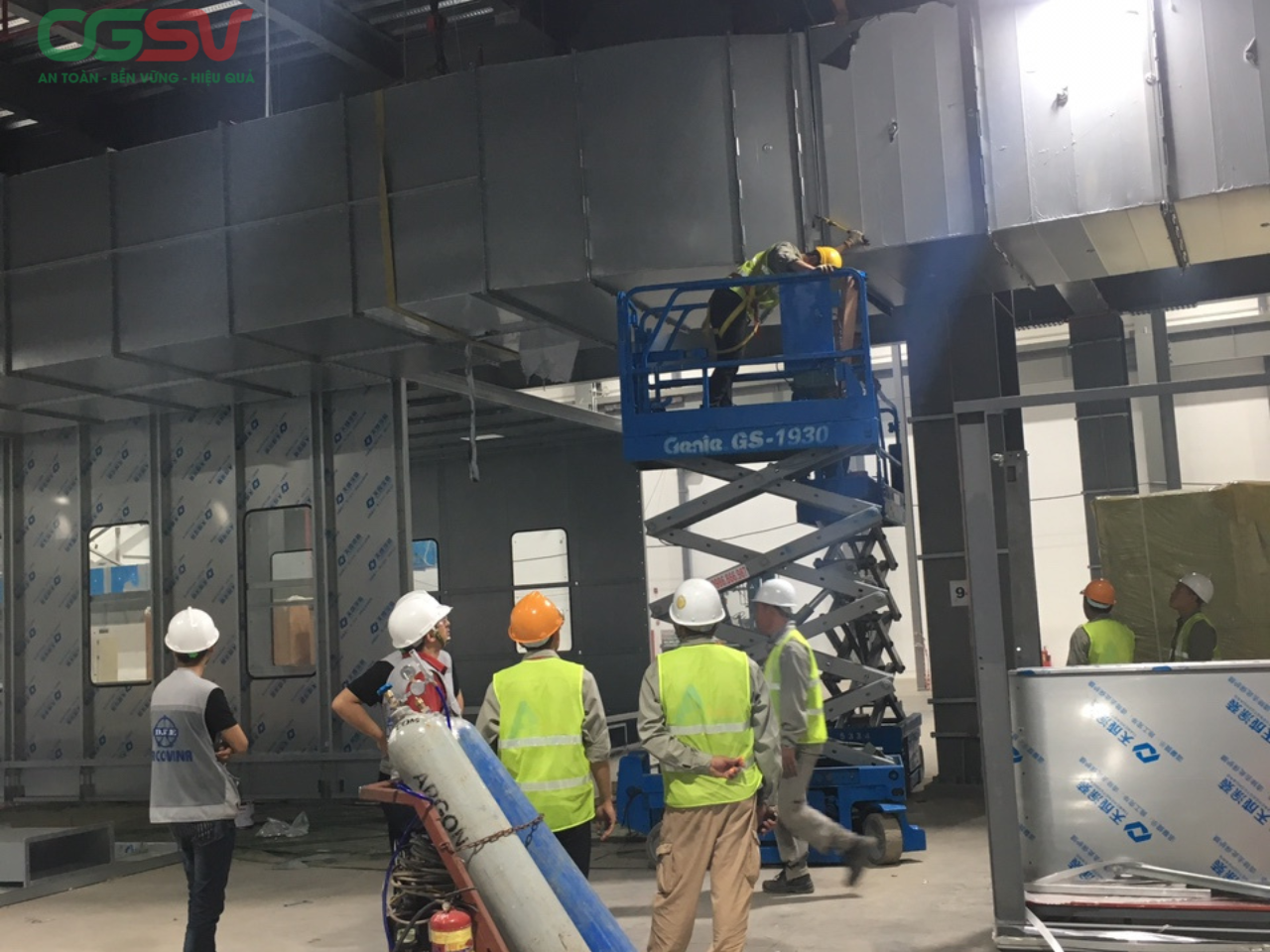
Notes on installing duct supports
To ensure stable system operation, in addition to distance, you need to pay attention to the following:
1. Suitable hanging location
- Hang them at joints, bends, and elbows to increase stability.
- Avoid hanging it in a weak or easily vibrating location.
2. Choose the support material.
- Threaded rods, V-shaped bars, and U-shaped bars must be able to withstand significant loads.
- Rust-resistant materials should be used to increase durability.
3. Ensure system balance
- Check the horizontal alignment of the air duct.
- Avoid misalignment that causes vibration and noise.
Conclude
Determining the correct spacing for duct support brackets according to technical standards is crucial for the efficient, safe, and durable operation of HVAC systems. Depending on the type, size, and material of the ductwork, you need to choose the appropriate spacing to optimize costs and project quality.