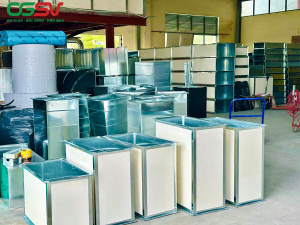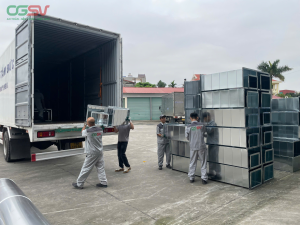
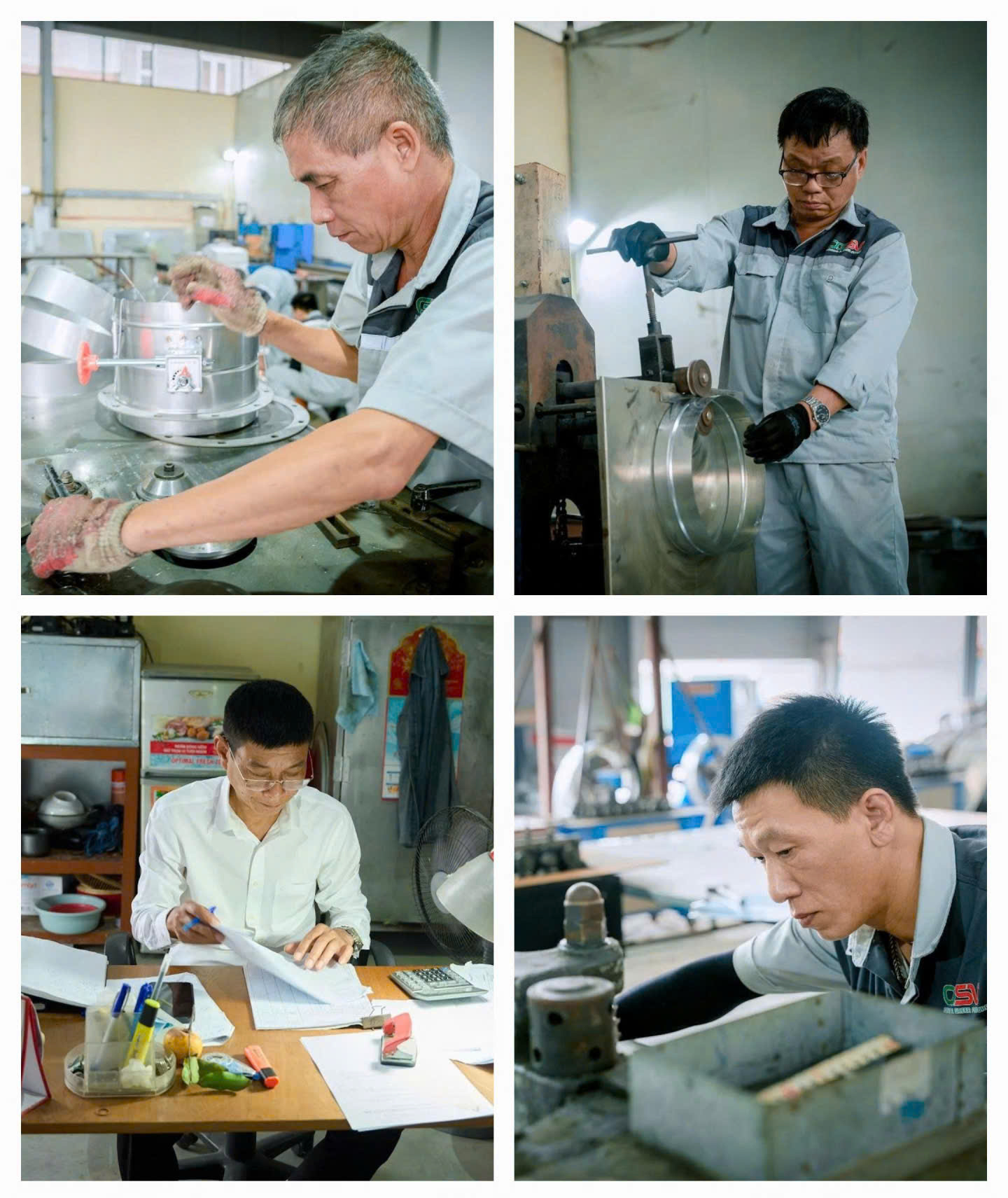
The material delivery and installation phase at the construction site is a crucial link determining the success or failure of a mechanical and electrical (M&E) project. Neglecting supervision can lead to serious consequences such as gas leaks, system noise, or even rejection of fire safety acceptance testing.
To ensure the system operates at optimal efficiency and meets delivery deadlines, the supervising engineer needs to have a thorough understanding of the process. Check the quality of the air ducts. Below before installation.
Step 1: Check Legal Documents and Quality Certificates
Before proceeding with physical measurements, the first step in the process is... acceptance testing of air ducts This involves checking the legality of the shipment.
- Attachments: Compare the factory certificates and quality certificates (CO/CQ) of the raw materials (galvanized steel, stainless steel, fire-resistant panels) to see if they match the list of materials approved by the investor.
- Fire safety certification: For the system EI duct (Fire-resistant air ducts) are required to have a fire protection equipment inspection certificate or a burn test report meeting the corresponding standards (EI 30, EI 45, EI 60, EI 120).
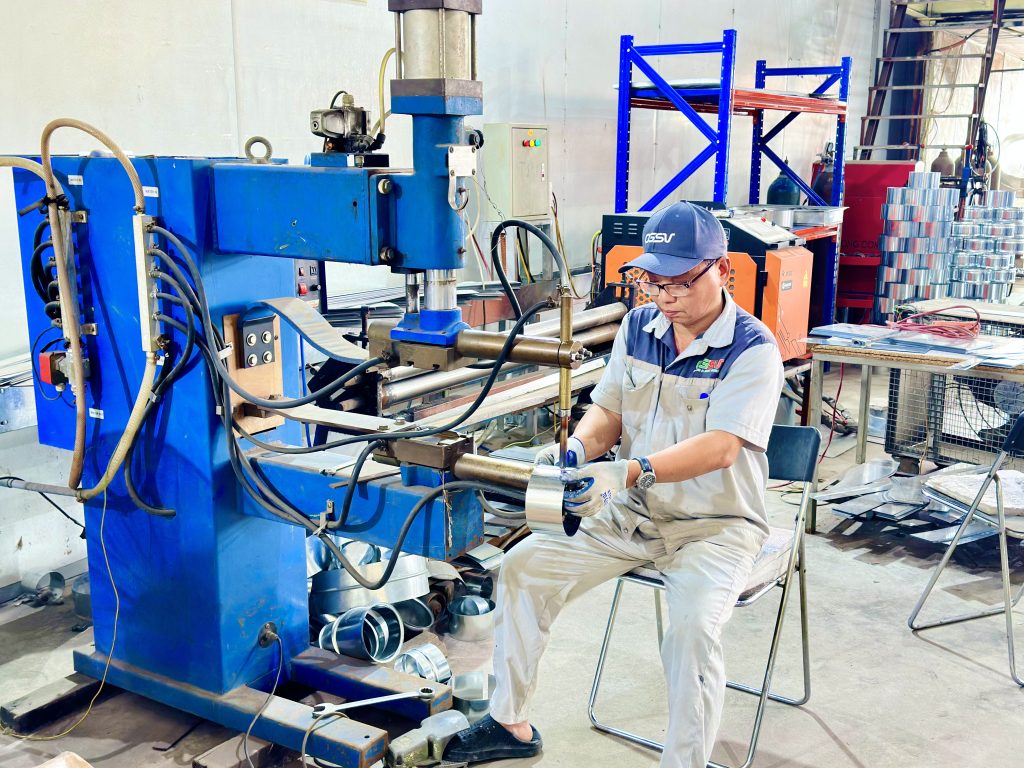
Step 2: Visually Inspect the Product
A standard duct section must ensure mechanical integrity from the first glance:
- Sheet metal surface: The zinc coating must be bright, uniform, and free from peeling, deep scratches, or rust caused by improper storage.
- Geometric shape: Square pipes must be perfectly square and sharp-edged, without dents or twists. The reinforcing ribs on the pipe body must be regular and strong.
- Locking joint: The locking seams (Pittsburgh or snap-lock) must be tightly pressed, completely sealed, and without gaps along the pipe body.
Step 3: Measure the Actual Geometric Dimensions
Dimensional errors exceeding acceptable limits will significantly hinder connections and reduce airflow pressure. Engineers need to use specialized calipers and measuring tapes for inspection.
- Core steel thickness: Check the thickness of the sheet metal blank (usually 0.5mm – 1.2mm depending on the pipe size) to ensure it conforms to the approved SMACNA or ASHRAE design standards.
- Internal dimensions: Measure the width, height (for rectangular tubes), or diameter (for spiral round tubes). Typical geometric error should not exceed ±2mm.
On-Site Quick Acceptance Checklist for Ductwork
| Inspection Items | Acceptance Criteria | Testing Method |
| Legal documents | Complete with CO/CQ certificates and factory release certificates. | Check the records |
| Zinc coating thickness | Meets the standard (e.g., Z120, Z180…) | Use a plating thickness gauge (if available) or your eye. |
| Cross-sectional dimensions | Error margin within ± 2mm | Standard measuring tape |
| Joint tightness | No light leaks / no gasket gaps | Light test |
Step 4: Check the specifications of the connecting flange and insulation layer.
The method of connection greatly determines the durability of the suspension system:
- Wall system: For square ductwork, check the height of the TDF/TDC flange or V-shaped steel flange to ensure even angles and that the bolt holes are not misaligned.
- Protective coating: With Fireproof duct, The thickness of the insulation panel (MGO, gypsum, or fire-resistant mortar) should be checked using a specialized measuring tool to ensure it conforms to the fire safety inspection standard.
Step 5: Conduct a Leakage Test
This is the most rigorous step in the process. Check the quality of the air ducts. Before mass installation:
- Light Test: Place a strong light source inside the sealed section of pipe. Move the light along the seams and flange joints. If any light leaks out, it indicates a leak and needs to be sealed with specialized silicone sealant.
- Pressure testing (applicable to large projects): Use a specialized air leakage tester to measure the air leakage rate under design pressure, ensuring the system meets the Class A, B, or C sealing requirements of the project.
Conclusion
Strictly applying the above 5-step inspection process will help supervising engineers effectively control the quality of incoming materials, minimizing the risk of having to dismantle or repair pipes after installation. This forms the most solid foundation for the process. acceptance testing of air ducts The process went smoothly, quickly earning top marks in the eyes of major investors.
>>> See more: Get free technical advice and a quote!
If you are looking for a reliable ducting supplier that guarantees safety, durability, and efficiency for your project in Hai Phong and surrounding provinces, please contact us immediately:
Address: 267 Le Thanh Tong, May Chai, Hai Phong
Mrs. Hang: 0815.999.826
Mrs Giang: 0934.559.168
E-mail: vietonggio@gmail.com