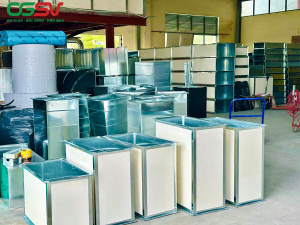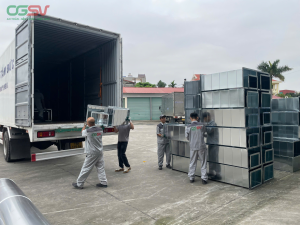
In fire protection systems, Fire-resistant ducting (EI) It plays a crucial role in controlling smoke and protecting escape routes. However, after a long period of operation, all equipment has a lifespan limit. So, How often do fire-resistant air ducts need replacing? To ensure maximum safety for the construction project?
Join Sao Viet Ducting Company in exploring the detailed timelines and signs indicating the need to replace this system in the article below.
1. Rated lifespan of fire-resistant ductwork
In reality, there is no absolute fixed number for replacing the entire system. However, based on material specifications, the lifespan of EI ductwork is generally divided as follows:
- Air ducts using fire-resistant panels (such as MgO panels, gypsum board): If installed in a dry, low-vibration environment, its lifespan can extend from... 20-25 years. After this time, the material structure begins to age, and its fire resistance may no longer meet the original EI standard.
- Fire-resistant painted air ducts: Fire-resistant paint has specific chemical properties. After 10-15 years, The paint layer may gradually lose its ability to swell when exposed to heat. This is when you should consider repainting or replacing the affected section of the pipe.
- Harsh environment: In chemical plants or coastal areas, corrosion rates are faster, meaning replacement intervals can be shortened to just a few minutes. 7-10 years.
2. When should fire-resistant ductwork be replaced immediately?
Instead of waiting until the theoretical lifespan is over, developers should replace the parts immediately if they encounter the following signs of serious deterioration:
Material structure deformation
If the outer sheath (fire-resistant panel) cracks or blisters due to water ingress or external impact, the insulation capacity will be completely lost. Even a small crack on the surface of an EI pipe is enough for fire and heat to penetrate within minutes during a fire.
Rust on galvanized steel core
Fire-resistant air ducts are constructed with a sheet metal core inside. If the suspension system is weak, leading to water accumulation, the sheet metal core will oxidize. When the inner iron layer corrodes, the entire system will lose its load-bearing capacity, risking collapse when the booster fan operates at high power.
Changes to current fire safety standards.
Sometimes replacement is necessary not due to damage but to legal requirements. If the EI standard regulations (such as QCVN 06:2022/BXD) change and the old system no longer meets the acceptance criteria, upgrading and replacement are mandatory to ensure the legal compliance of the project.
3. Solutions to extend the lifespan of EI ductwork.
To avoid having to replace parts too early and wasting budget, you should implement the following solutions from the start:
- Choose high-quality fire-resistant materials: Use fire-resistant panels that are water-resistant, moisture-resistant, and do not degrade over time (such as our next-generation fire-resistant panels).
- Professional installation process: Ensure that the joints are treated with heat-resistant adhesive and specialized silver tape to prevent moisture from penetrating the pipe core.
- Regular maintenance: Cleaning and inspecting the system once a year helps detect localized damage early so that it can be repaired, instead of having to replace the entire system.
4. Why should you choose fire-resistant ducting from a reputable manufacturer?
Choosing a unit duct manufacturing Reputation not only ensures you get products that meet EI30, EI 60 to EI 120 standards, but also guarantees:
- The materials have a clear origin and have received certification from the Fire Prevention and Control Department.
- We provide accurate advice on the type of air duct suitable for the specific environmental conditions of the building.
- Long-term warranty and technical support throughout the product's lifecycle.
Conclude
Job How often do fire-resistant air ducts need replacing? It depends heavily on the quality of the initial product and regular maintenance. Don't let life-saving systems become useless due to expiration or degradation.