Condensation on air ducts is a common problem in HVAC systems, especially in hot and humid environments like Vietnam. If left untreated, this not only detracts from the aesthetics but also leads to mold growth, ceiling damage, and reduced system lifespan. So what are the causes and how can this problem be completely resolved?
Causes of condensation on air ducts
Condensation occurs when the surface temperature of an air duct is lower than the dew point of the surrounding air. Some of the main causes include:
1. Lack of or damage to the insulation layer.
The insulation layer's purpose is to prevent temperature differences. When this layer is thin, torn, or improperly installed, it will cause condensation.
2. High ambient humidity
In areas like basements, workshops, or during humid seasons, high humidity increases the risk of condensation.
3. Cold air leak in the ductwork.
Leaky air ducts allow cold air to escape, lowering surface temperatures and causing condensation.
4. The system design is not optimized.
Air ducts placed near heat sources or without proper flow rate calculations can also easily lead to this phenomenon.
The harmful effects of condensation on air ducts.
- It causes mold and mildew on ceilings and walls, affecting the aesthetic appearance of the building.
- Reduces HVAC system efficiency.
- Increased risk of bacteria and mold, affecting health.
- Damage to insulation and surrounding structures.
How to completely eliminate condensation on air ducts.
To effectively resolve the issue, it is necessary to address the root cause and combine multiple solutions:
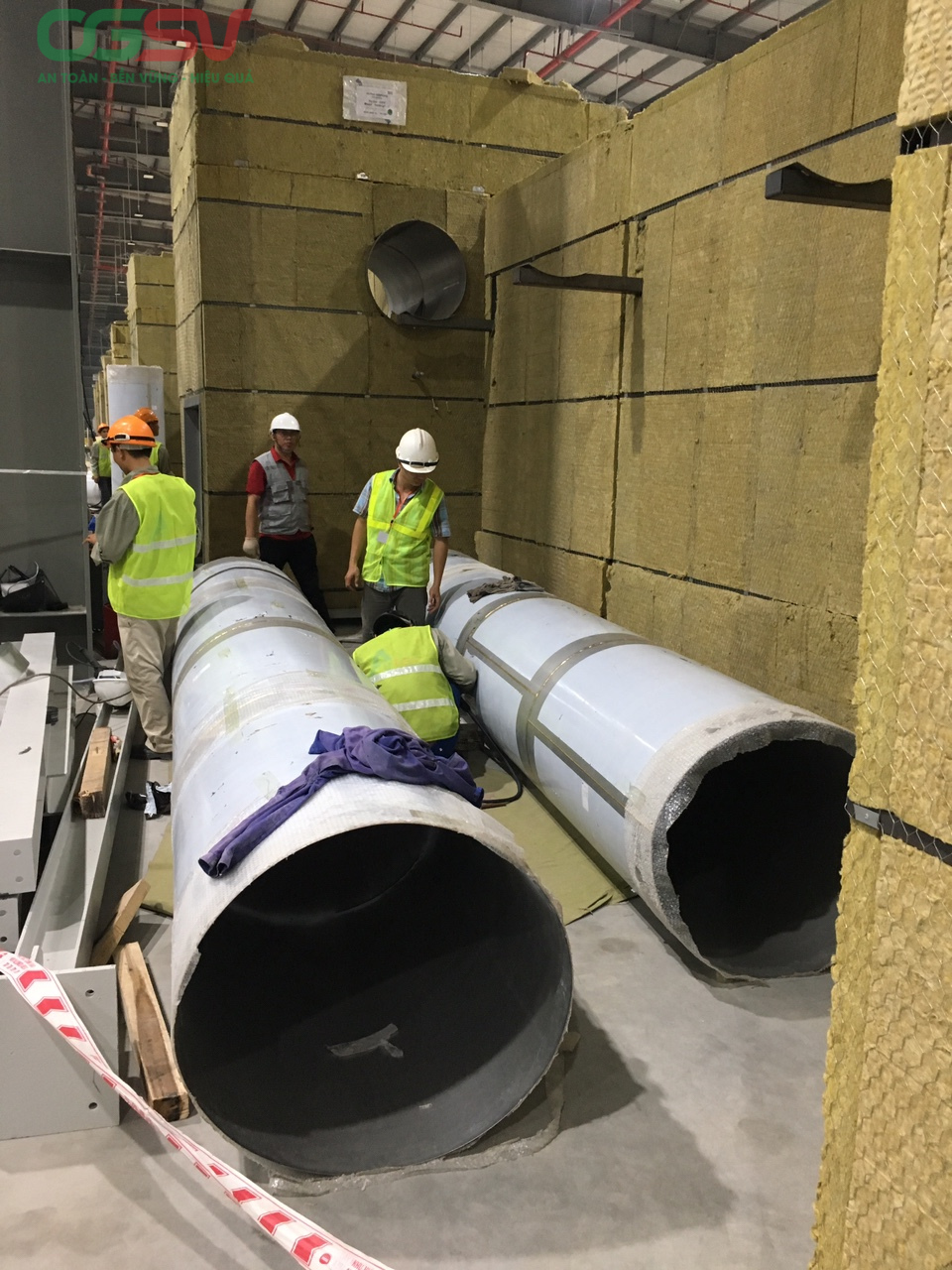
1. Proper insulation wrapping according to standards.
Use quality insulation materials such as:
- Fiberglass
- Vulcanized rubber
Ensure:
- Suitable thickness
- The construction is sealed, with no exposed joints.
- Apply adhesive and seal the entire surface of the pipe.
This is the most important solution to prevent condensation.
2. Inspect and repair air duct leaks.
- Inspect the joints and flanges.
- Use specialized sealant or gaskets.
- Ensure the system is completely sealed.
3. Control air humidity
- Use a dehumidifier in areas with high humidity.
- Increase natural or mechanical ventilation.
- Avoid making the space too cramped.
4. Redesign the system if necessary.
- Recalculate the airflow rate.
- Adjust the installation position of the air duct.
- Avoid placing the pipe near heat sources or humid areas.
-
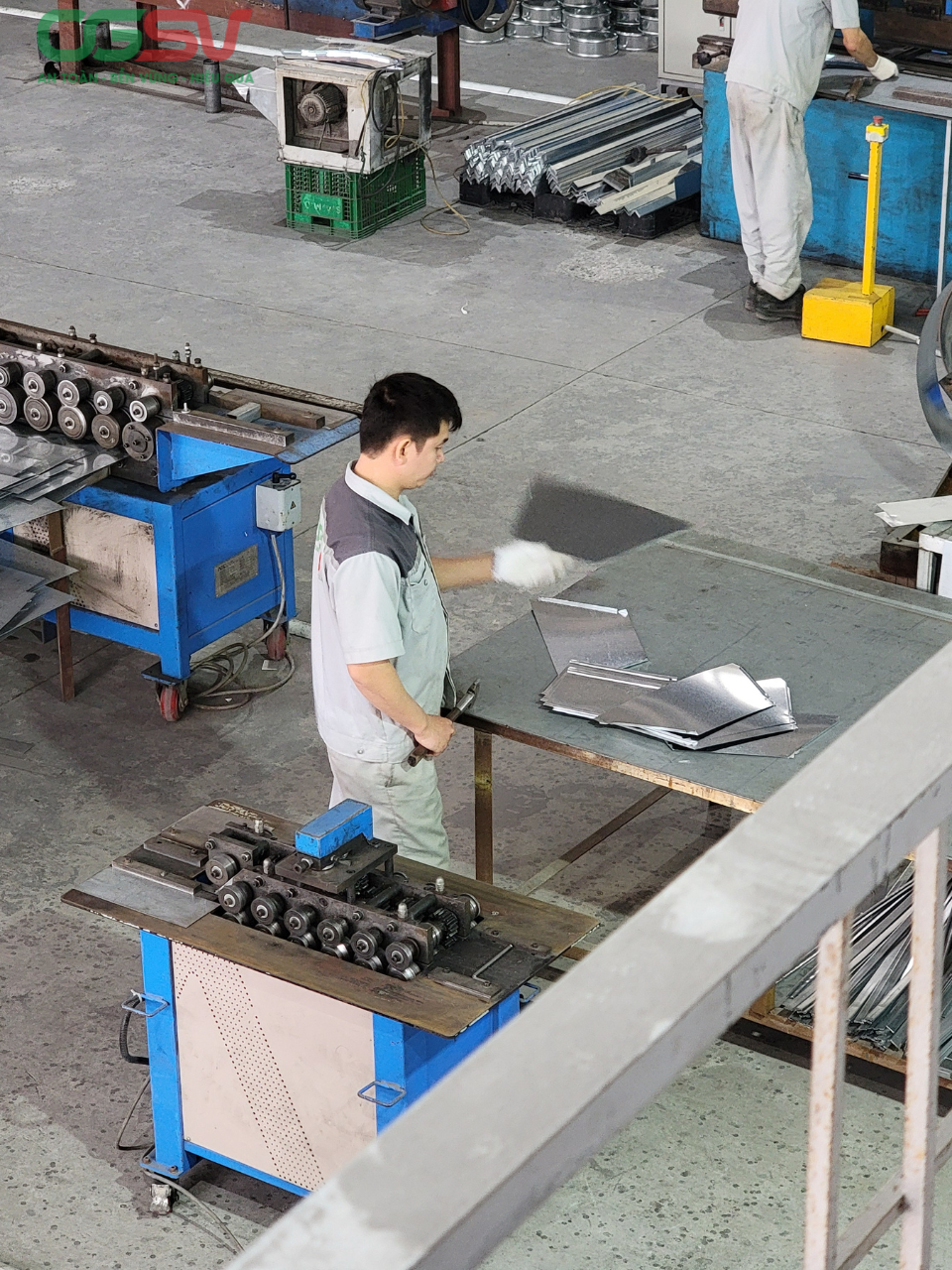
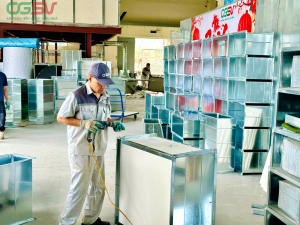
CGSV technicians are performing sheet metal fabrication at the production workshop.
5. Regular system maintenance
- Check the insulation layer.
- Cleaning air ducts
- Early detection of condensation
Conclude
Condensation on air ducts can be completely eliminated if the cause is correctly identified and appropriate technical solutions are applied. In particular, proper insulation and ensuring an airtight system are key factors in maintaining long-term effectiveness.
If you are experiencing this problem, you should have your system checked as soon as possible to avoid incurring significant repair costs later.