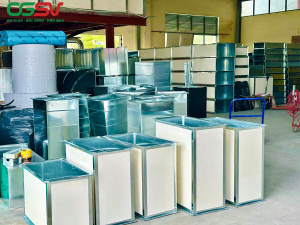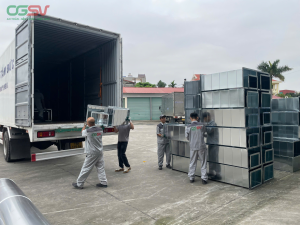

The performance of a central air conditioning and ventilation (HVAC) system depends heavily on the quality of on-site installation. ventilation system installation Incorrect procedures not only reduce airflow pressure but also waste energy and generate mechanical noise.
Accurately identify the duct installation error The following common issues will help the supervisory team and contractors effectively control quality and ensure technical acceptance standards are met.
1. Center misalignment leading to gas leakage at flanged joint.
This is the most common type of error on construction sites, directly causing a loss of fresh or cool air flow before it reaches the exhaust vents.
- Reason: During installation, the team failed to align the pipe sections evenly, causing the connecting flanges (TDF/TDC or V-shaped steel flanges) to have a small beveled gap. Additionally, improperly applied foam gaskets, broken sections, or the omission of sealing material (Mastic/HVAC Sealant) at the four flange corners can also cause air leaks under high wind pressure.
- Correction measures:
- Mechanical alignment: Loosen the bolts and adjust the suspension rods to align the centers of the two duct sections perfectly before tightening them again.
- Tight sealing: Replace the damaged foam gasket. After securing the flange with clamps, it is mandatory to fill all four corners of the flange with a specialized heat-resistant sealant to eliminate micro-gaps. Perform a light test to check for leaks before delivery.
2. Design of Pipelines with Bending and Curvature Causes Dynamic Pressure Loss
This error often occurs when the construction site has a spatial conflict with other technical systems such as electrical cable trays, fire hydrants, or building concrete beams.
- Reason: To avoid obstacles on the site, the construction workers arbitrarily installed right-angle elbows and bends that were too sharply bent, failing to meet the standard bending radius.
- Consequence: The high-speed airflow is suddenly blocked, creating turbulent vortices within the duct. This causes a drop in the dynamic pressure of the airflow and generates a loud whistling sound that travels down into the usable space.
- Correction measures: Reroute or lower the overall elevation to accommodate elbows with a minimum radius R = 1D to 1.5D (where D is the pipe width). If the layout necessitates the use of flat square elbows, additional fittings must be requested. flow guide (Turning Vanes) are shaped inside the valve to direct airflow smoothly.
Air Duct Installation Quality Management Checklist
| Current Field Error Status | Operational Consequences | Technical Standard Processing Solution |
| Misalignment, flange gap | Static pressure drop, airflow loss, fan running to compensate for load. | Realign the shaft, tighten the bolts evenly, and fill the flange corner sealant. |
| The corner is too sharp. | It obstructs the airflow, creating a whistling sound at the exhaust port. | Replace with a standard elbow or reinforce the flow guide vanes. |
| The suspension rods are spaced too far apart. | The duct sags and vibrates violently when the fan starts. | Install additional support stakes, ensuring a spacing of 2m – 3m according to SMACNA standards. |
3. The pipeline sags due to a loose suspension system.
The suspension system acts as a structural framework and ensures the mechanical safety of the entire pipeline route along the construction site.
- Reason: The contractor spaced the suspension rod supports too far apart to cut material costs, or drilled expansion anchors (iron anchors) too shallowly into the concrete ceiling, causing the load-bearing threads to slip under the dynamic load of the gas.
- Consequence: The horizontal air duct sags, affecting aesthetics and altering the airflow direction. When the booster fan or exhaust fan starts suddenly, the change in internal pressure causes the duct to vibrate violently, impacting the ceiling system.
- Correction measures: In the process ventilation system installation, It is mandatory to maintain the spacing of duct support brackets according to the standard SMACNA density (from 2m to a maximum of 3m depending on duct size and load). At locations with heavy components such as fire dampers (FD), check valves, or sound attenuator boxes, independent reinforced suspension rods must be provided to bear the load separately; under no circumstances should they be attached to the duct flange.
4. Condensation on Pipe Casing Due to Insulation Coating Faults
This problem often occurs in cold air supply duct systems that run through unconditioned spaces (such as utility shafts, voids above false ceilings).
- Reason: The chosen insulation layer (vulcanized rubber or fiberglass) is too thin, not as calculated, or the joints between the insulation panels are loose, with the protective silver tape peeling off.
- Consequence: This creates a "thermal bridge" phenomenon. Humid outside air encounters the cold metal walls inside, causing condensation to form on the outside of the pipes. This condensation then drips down, causing decay, yellowing of the plaster ceiling, and mold growth.
- Correction measures: Measure and recalculate the insulation thickness based on the actual air temperature and humidity of the environment. At the joints of the insulation panels, the surface must be cleaned and tightly sealed with wide silver tape to ensure a complete seal, absolutely isolating the inner cold-rolled steel wall from the humid external environment.
Conclusion
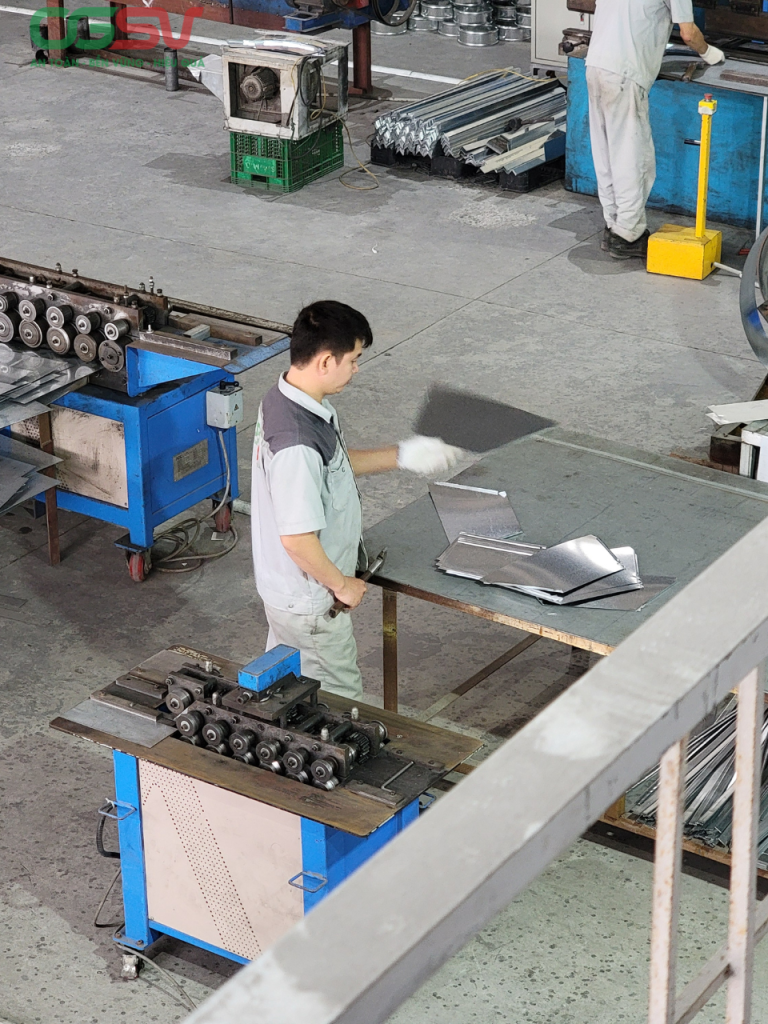
Most of them duct installation error At the construction site, all risks can be controlled and prevented early through a strict monitoring process. Besides the skill of the workers, the use of materials manufactured with high mechanical precision and square flanges from the factory will help minimize the risk of gas leaks at the construction site.
If your project is looking for a standardized supply chain solution or requires consultation on options. ventilation system installation For optimal results, contact Sao Viet today to receive support from our experienced electromechanical engineers!
>>> See more: Get free technical advice and a quote!
Address: 267 Le Thanh Tong, May Chai, Hai Phong
Mrs. Hang: 0815.999.826
Mrs Giang: 0934.559.168
E-mail: vietonggio@gmail.com