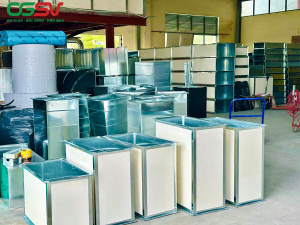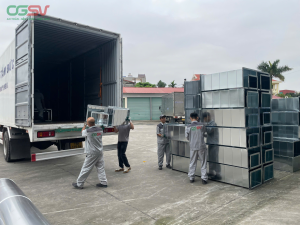

In the operating costs of office buildings, factories, or shopping centers, air conditioning and ventilation systems always account for the largest proportion, typically ranging from 40% to 60% of total electricity consumption. Therefore, finding a solution is crucial. energy saving HVAC This is a top priority for business managers.
Many people often focus on investing in expensive Inverter air conditioners, forgetting that poor-quality ductwork is the core cause of heat loss and wasted energy. The design and Optimizing the ventilation system Meeting mechanical standards can help businesses immediately cut their electricity bills by 20% each month.
1. Reduce Pressure Loss by Optimizing Duct Shape
When the main fan pushes air into the system, the airflow will friction with the duct walls, creating a pressure drop along the transmission line. If the pressure loss is too great, the fan must increase its operating power to ensure sufficient air supply at the end points, leading to higher energy consumption.
- Prioritize the use of spiral round ducting: Compared to traditional square ducting, spiral round ducting does not have 90-degree dead corners. Thanks to its uniformly rounded structure, the airflow moves more smoothly, minimizing internal friction and significantly reducing air turbulence that causes pressure loss.
- Design large radius of curvature at turning points: At bends and curves, engineers need to calculate the radius of curvature precisely. Avoiding sharp turns will help the airflow move continuously, reduce pressure on the fan blades, and help the system operate more smoothly.
2. Thoroughly address the issue of gas leaks and heat loss.
Leaks of exhaust or refrigerant at flange joints are a silent cause of increased electricity costs. When air is lost along the way, the HVAC system has to compensate with extra power to maintain the set room temperature.
- Control the tightness of the joints: The entire duct system must be connected using robust flanges, heat-resistant rubber gaskets, or specialized silicone sealant at the joints. A system meeting Class A or Class B tightness standards will completely prevent airflow loss.
- Use high-quality closed-cell insulation materials: For cold air ducts, insulation is mandatory. Businesses should choose closed-cell vulcanized rubber instead of conventional fiberglass. This material has an extremely low thermal conductivity coefficient, preventing thermal bridging and condensation on the outer walls of the ducts, maintaining a stable air temperature from the central plant to the air vents.
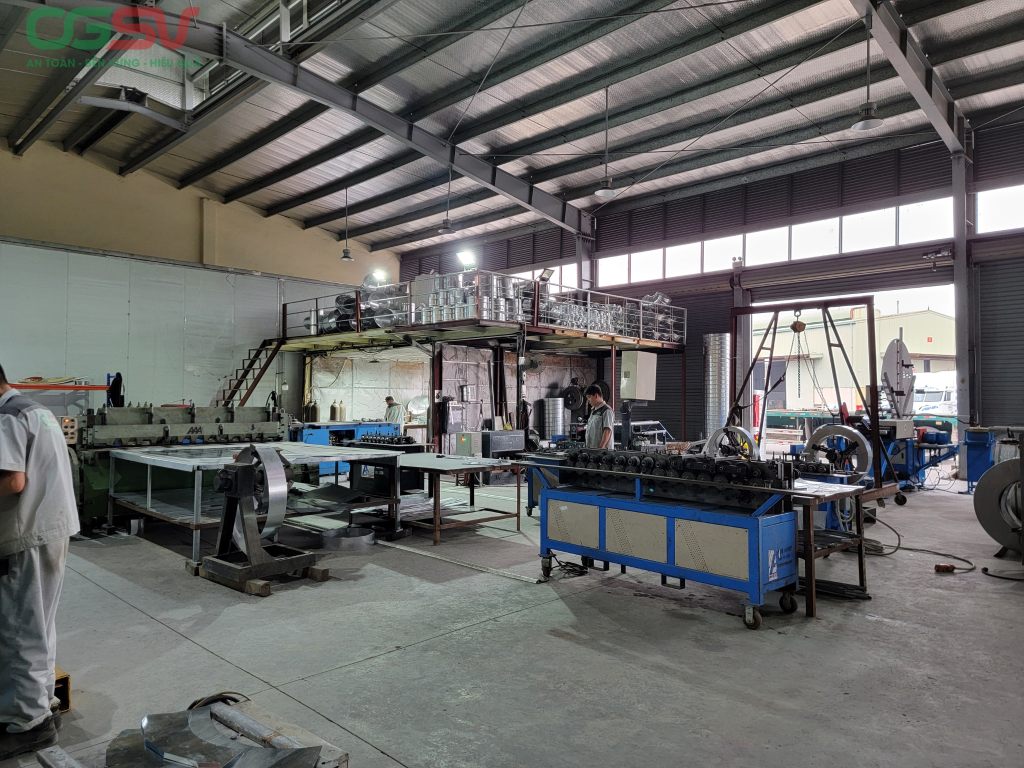
Comparison Table of Energy Saving Efficiency from Duct Systems
| Technical Factors | Poor Quality System | The System Has Been Optimized |
| Pipe shape | Square tube with angled bend, high pressure loss. | The round tube is twisted and curves smoothly. |
| Gas leakage rate at joints | 15% – 20% at open flange joints | Almost equivalent to 0% thanks to HVAC gaskets and sealant. |
| Overall power consumption level | The fan is running overloaded, wasting energy. | The fan runs at the correct load, saving 20% of electricity. |
3. Leveraging VAV (Variable Frequency Drive) Control Technology
To improve efficiency Optimizing the ventilation system, Therefore, businesses should combine standard mechanical ductwork with a variable air volume (VAV) control system.
Instead of supplying a fixed amount of air throughout the day, the VAV system relies on temperature and actual exhaust gas concentration sensors in the room to adjust the shut-off valves in the ductwork. When room demand decreases, the valves automatically close, the duct pressure changes, and the inverter controls the main fan to slow down. This combination is highly efficient. energy saving HVAC Superior for the entire building.
Conclusion
Air duct systems are not simply lifeless metal pipes; they are the lifeblood of a building's energy conduit. Investing in precisely manufactured materials and implementing standardized installation methods from the outset is the most practical solution to optimize long-term operating costs for businesses.
If your business is looking for ductwork upgrades or needs high-quality, energy-efficient ducting materials, contact Sao Viet today to receive support from our team of highly experienced HVAC engineers!
>>> See more: Get free technical advice and a quote!
If you are looking for a reliable ducting supplier that guarantees safety, durability, and efficiency for your project in Hai Phong and surrounding provinces, please contact us immediately:
Address: 267 Le Thanh Tong, May Chai, Hai Phong
Mrs. Hang: 0815.999.826
Mrs Giang: 0934.559.168
E-mail: vietonggio@gmail.com