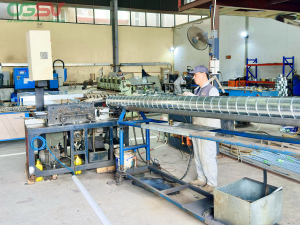
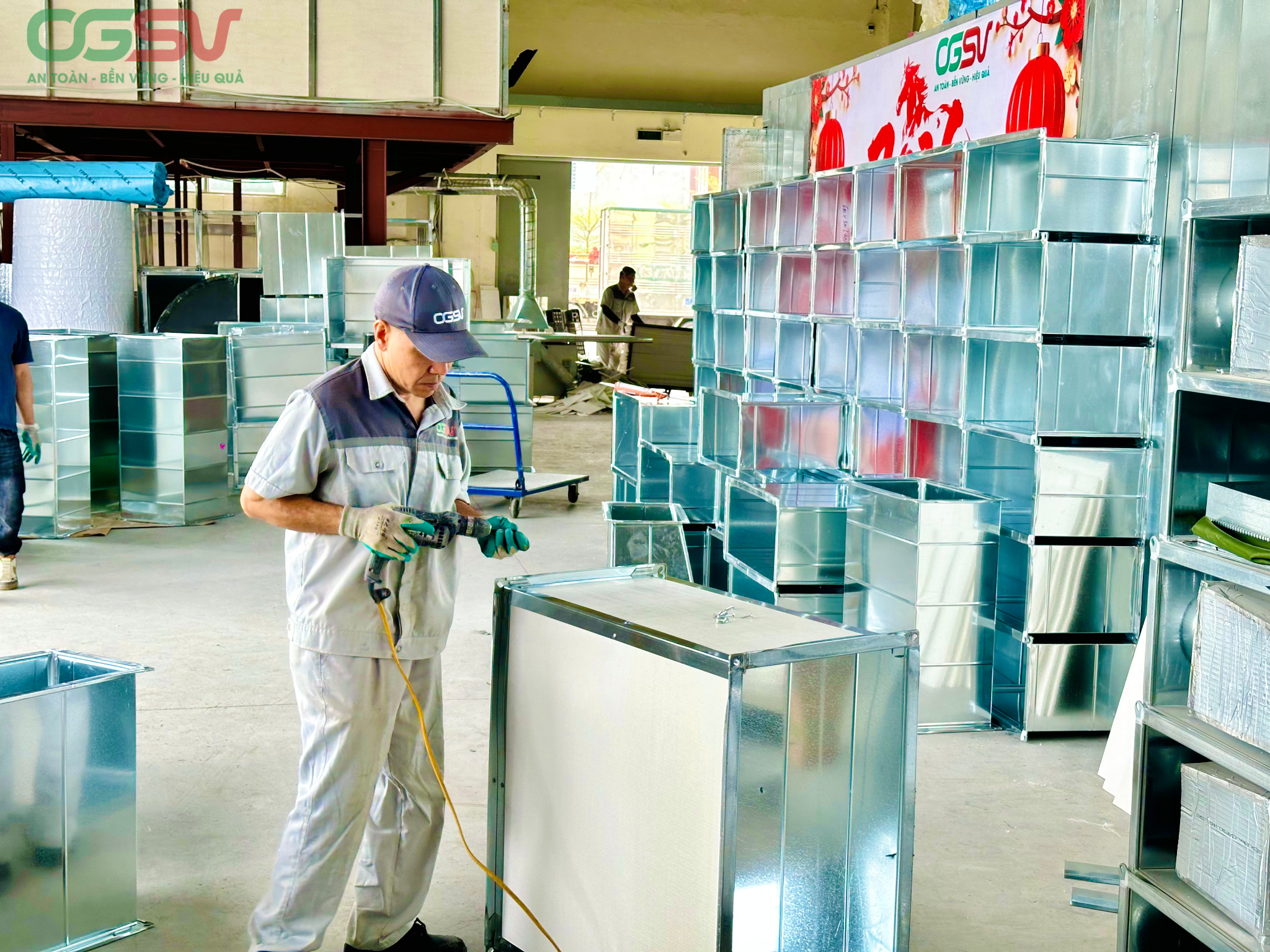
Learn about the steps involved in ductwork fabrication at the factory, from receiving drawings, production implementation, shaping, assembling, to inspection and delivery of finished products.
The quality of air ducts depends not only on the materials but also on how production is organized and each stage is controlled. A clear manufacturing process helps minimize dimensional errors, incorrect component codes, and delivery delays. For HVAC projects, standardizing input data between the engineering, manufacturing, and site departments is a crucial step before processing the product.
1. Receiving and reviewing technical documents
Before production begins, the workshop needs to receive the confirmed drawings, component lists, materials, thicknesses, and specific project requirements. Areas with missing dimensions, unclear connection directions, or potential intersections must be clarified with the client. Identifying the correct drawing version helps avoid production based on outdated data.
2. Prepare drawings and classify components.
Based on the approved specifications, the engineering department will develop detailed plans for each pipe section and fitting. Components should be categorized by area, level, route, or identification code for ease of production and packaging. Details such as elbows, tees, reducers, branches, and connectors must clearly show their dimensions and construction.
3. Cutting, shaping, and joining
The material is cut to the predetermined dimensions, then shaped, seamed, and assembled according to the required structure. During this process, attention must be paid to the cut edges, squareness, flatness, and deformation. The operations must be appropriate for the type of material and the factory's production process.
4. Checking, coding, and handover
Before shipment, finished products must be compared against the catalog: type, size, quantity, component code, and surface condition. Grouping by installation area facilitates on-site inventory and reduces search time. Any discrepancies must be noted and addressed before delivery.
Summary table
| Process | Content control | Documents/information that should be saved |
| Reception | Drawing version, materials, scope of supply | List of drawings and technical requirements |
| Deployment | Dimensions, component code, installation location | Production deployment plan |
| Processing | Cutting, shaping, joining, deformation | Production tracking sheet |
| Check | Quantity, size, appearance | Minutes or checklist |
| Hand over | Item code, region, packaging status | Delivery note, package list |
Conclusion
The duct fabrication process at the workshop needs to be considered in conjunction with the design documents, construction conditions, and acceptance requirements of each project. Agreeing on information from the outset helps contractors control quality, minimize issues, and facilitate more effective coordination between all parties.
Contact Sao Viet Air Ducting
Sao Viet Air Ducting accepts requests for fabrication of air ducts and accessories according to project drawings and technical documents. M&E contractors can submit drawings or Bill of Quantities (BOQ) to discuss the scope of supply and necessary confirmation information.
SAO VIET AIR DUCT MANUFACTURING AND TRADING COMPANY LIMITED
Address: 267 Le Thanh Tong, May Chai, Hai Phong
Hanoi Representative Office: No. 19, Lane 24, Kim Dong Street, Giap Bat Ward, Hoang Mai District, Hanoi
Hotline: 0815.999.826 – 0934.559.168 | Technical support: 0949.852.886
Email: vietonggio@gmail.com