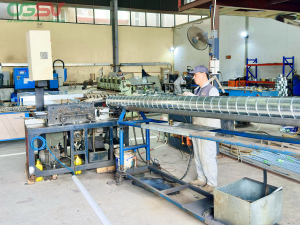

Learn about the purpose of insulating air conditioning ducts, the factors to consider when selecting insulation materials, and the points to check during construction.
In some air conditioning systems, ductwork needs to be insulated according to design requirements. The insulation layer helps limit heat exchange between the air inside the duct and the surrounding environment, and also helps control condensation under suitable conditions. The type and thickness of the material must be determined according to the technical specifications; it should not be chosen arbitrarily.
1. Purpose of insulation
For cold air supply lines, temperature and humidity differences can lead to condensation on surfaces if insulation and moisture control are inadequate. Insulation is designed to help limit heat transfer and reduce the risk of condensation. Specific requirements for each system depend on operating conditions and design.
2. Select materials according to project requirements.
Insulation materials can vary in thermal conductivity, moisture resistance, flammability, thickness, and application methods. Considerations include operating temperature, indoor or outdoor location, hygiene requirements, and applicable fire safety regulations. The specifications should be compared with the manufacturer's technical documentation.
3. Points to note during construction
The pipe surface must be properly prepared before wrapping. Material joints must be treated consistently according to technical guidelines; elbows, flanges, valves, and supports must be carefully finished. If the insulation layer is torn, open, or damp, the insulation effectiveness may be affected.
4. Inspection and protection after completion
After construction, the continuity, surface condition, joints, and penetration points through the structure must be checked. Outdoor sections may require additional protective coatings as per the design. While other teams are working, avoid stepping on, bumping into, or tearing the insulation layer.
Summary table
| Criteria | Information needs to be confirmed. | How to check |
| Material | Types and technical documentation | Compare with the specification. |
| Thickness | Value as per design documents | Test at a sample or representative location. |
| Joint | Continuity and gap handling | Observe the entire route. |
| Moisture resistant | Solutions at joints and surfaces | Test for permeability |
| Outdoor protection | Protective casing by design | Post-completion inspection |
Conclusion
Air conditioning duct insulation needs to be considered in conjunction with the design documents, construction conditions, and acceptance requirements of each project. Agreeing on information from the outset helps contractors control quality, minimize issues, and facilitate more effective coordination between all parties.
Contact Sao Viet Air Ducting
Sao Viet Air Ducting accepts requests for fabrication of air ducts and accessories according to project drawings and technical documents. M&E contractors can submit drawings or Bill of Quantities (BOQ) to discuss the scope of supply and necessary confirmation information.
SAO VIET AIR DUCT MANUFACTURING AND TRADING COMPANY LIMITED
Address: 267 Le Thanh Tong, May Chai, Hai Phong
Hanoi Representative Office: No. 19, Lane 24, Kim Dong Street, Giap Bat Ward, Hoang Mai District, Hanoi
Hotline: 0815.999.826 – 0934.559.168 | Technical support: 0949.852.886
Email: vietonggio@gmail.com