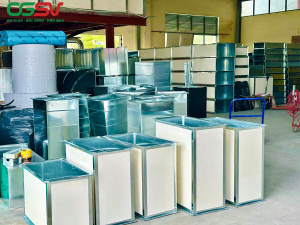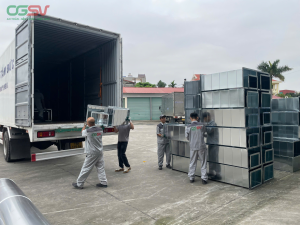
The kitchen is considered the heart of any restaurant, hotel, or canteen. However, it is also the source of a large amount of heat, smoke, steam, and grease fumes during the cooking process. If not properly treated, these emissions will pollute the cooking space, directly affecting the health of staff and spreading to the dining area for customers.
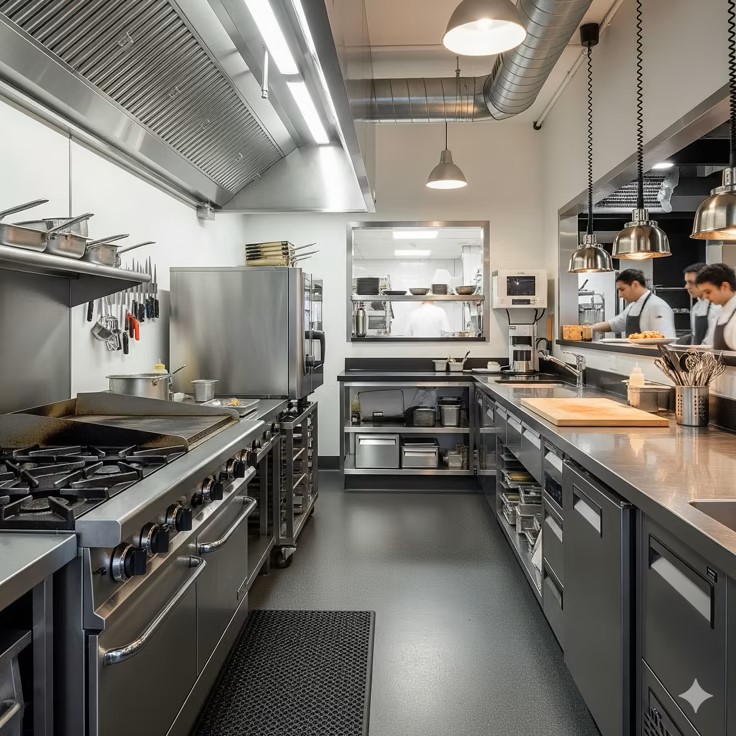
Therefore, investing in a standard industrial kitchen exhaust system is a mandatory requirement. Below are the core secrets to help engineers and investors design optimally functioning and cost-effective ductwork and exhaust hoods.
1. Determine the Standard Fan Power and Suction Flow Rate
The most common mistake when installing an exhaust system is choosing the exhaust fan based on intuition, leading to situations where the fan runs overloaded but smoke still escapes, or the fan is too large, wasting electricity and creating excessive noise.
The required airflow rate is calculated based on the surface area of the exhaust hood. Technically, this rate is the result of multiplying the hood's surface area by the wind speed at the intake opening and a time conversion factor.
The airflow velocity at the exhaust hood opening is typically selected from 0.25 m/s to 0.4 m/s, depending on the type of cooking stove—Asian stoves (abundant smoke, large flames) or European stoves (even heat distribution, less smoke). From this total airflow, engineers will calculate the pressure loss along the duct to select the centrifugal fan with the most suitable power and head pressure.
2. Design Standards for Kitchen Exhaust Duct Systems
Kitchen exhaust duct systems have much more specific characteristics than ordinary ventilation ducts because the airflow carries a large amount of vaporized animal fat. When exposed to low outside temperatures, the fat condenses and adheres tightly to the duct walls.
- Materials: Stainless steel (304 or 201) or galvanized sheet metal with a minimum thickness of 1.0 mm or more must be used for high-temperature pipe sections near the stove. Stainless steel provides a smooth pipe surface, resists corrosion from cleaning chemicals, and minimizes friction during airflow.
- Pipe slope: Horizontal air ducts must be designed with a slight slope (approximately 1% to 2%) towards the glass vent or grease discharge point so that condensed oil and grease automatically flow to a collection point, preventing accumulation and leakage through flange joints.
- Air velocity in the duct: To minimize grease deposition on the duct walls, the air velocity inside the duct must be maintained at a high level, ranging from 8.0 m/s to 12.0 m/s.
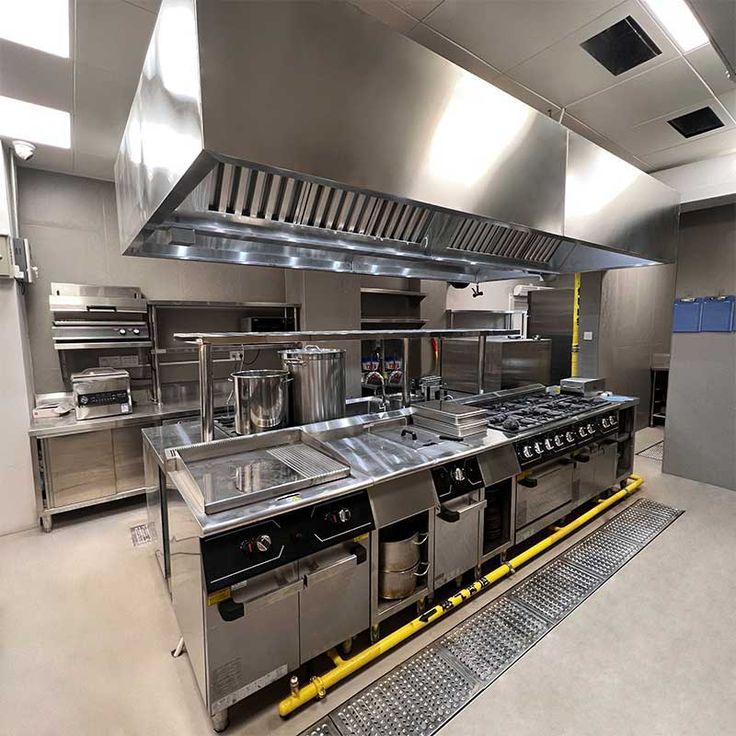
Checklist of Technical Specifications for Restaurant Kitchen Systems
| System Components | Standard Technical Specifications | Recommended Materials |
| Hood | Suction mouth velocity: 0.25 – 0.4 m/s | 304 stainless steel, 1.0mm – 1.2mm thick |
| Ducting | Velocity inside the tube: 8.0 – 12.0 m/s | Galvanized steel or stainless steel depending on the segment. |
| Centrifugal Exhaust Fan | Standard noise level: < 75 dBA | Indirect fan blades (belt drive) are grease-resistant. |
3. Integrated Comprehensive Soundproofing and Odor Control Solutions
A well-functioning industrial kitchen exhaust system should not only remove smoke effectively but also be environmentally friendly and not cause noise pollution.
- Noise reduction: High-power centrifugal fans always produce significant vibration and humming noise from their blades. Contractors need to install rubber damping pads for the fan, connect ducts using heat-resistant canvas flexible couplings, and add duct silencers before the exhaust air is released into the environment.
- Grease and odor removal system: The exhaust hood must be equipped with an aluminum mesh grease filter or stainless steel grease trap to retain most of the coarse grease. For restaurants located in residential areas or shopping malls, the exhaust air must pass through an electrostatic precipitator (ESP) or activated carbon filter to remove odors before being directed to the rooftop.
Conclusion
Designing an efficient industrial kitchen exhaust system requires a close combination of calculating airflow, arranging the kitchen exhaust ductwork according to mechanical standards, and selecting accompanying treatment equipment. Choosing a supplier of ductwork and exhaust hoods with high mechanical precision will help restaurant owners minimize operating and maintenance costs in the future.
If you are planning to open a restaurant or need advice on renovating your kitchen exhaust system to meet high operational standards, contact Sao Viet today to receive support from our most experienced engineers!
>>> See more: Get free technical advice and a quote!
If you are looking for a reliable ducting supplier that guarantees safety, durability, and efficiency for your project in Hai Phong and surrounding provinces, please contact us immediately:
Address: 267 Le Thanh Tong, May Chai, Hai Phong
Mrs. Hang: 0815.999.826
Mrs Giang: 0934.559.168
E-mail: vietonggio@gmail.com