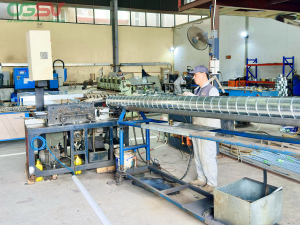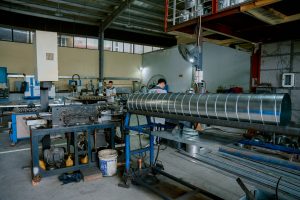
One piece of information that needs to be agreed upon right from the start when placing a manufacturing order is... air duct is the thickness of the sheet metal.
If you only provide the dimensions and quantity without specifying the thickness, the manufacturer may have to ask for clarification or provide a quote based on assumptions. This prolongs processing time and can lead to discrepancies between the quoted price, production, and final acceptance.
For contractors M&E/Fire Protection, The thickness of the steel sheet should be determined based on the specifications, drawings, and technical requirements of each project.
1. Does the thickness of the duct sheet affect the material?
The material thickness is directly related to the structure and machinability of the air duct.
Even with the same pipe size, using different wall thicknesses will result in variations in material volume, finished product weight, and production costs.
Therefore, one should not only focus on the price per square meter but also clearly identify the pricing standard being used.
2. Factors to consider before choosing thickness
The contractor should check at least the following information:
- Pipe cross-sectional dimensions.
- Length of each segment.
- System operating pressure.
- Installation location.
- Reinforcement is required.
- Linking method.
- Applicable standards.
- Project specification.
- Acceptance testing required.
You shouldn't choose the thickness based solely on experience if the project already has specific technical requirements.
3. Is pipe size related to its wall thickness?
Have.
As pipe sizes increase, requirements for stiffness and reinforcement also need to be considered.
Especially for large-diameter pipelines, contractors need to check both the thickness and the reinforcement method instead of just looking at one parameter.
| Element | It may affect | The contractor needs to check. |
|---|---|---|
| Pipe size | Structural stiffness | Width, height |
| Length | Transportation/Installation Capabilities | Length of each segment |
| Pressure | Structural requirements | Specification |
| Reinforcement | Pipe stability | Reinforcing ribs/tendons |
| Link | Joint strength | TDC/TDF/C-shaped splint |
| Standard | Production specifications | Project standards |
Therefore, Sheet metal thickness should not be considered in isolation. which needs to be considered within the overall design of the system.
4. Specifications are more important than choosing thickness based on habit.
A common mistake is when contractors send requests that:
“"Quotation for galvanized sheet metal air ducts."”
But no specifications or thickness were provided.
In that case, the supplier must ask for clarification or make assumptions in order to prepare a quotation.
A better approach is to provide complete information:
| Information | Content |
|---|---|
| Material | Types of roofing sheets |
| Thickness | According to design/specification |
| Size | According to the drawing |
| Reinforcement | As requested |
| Link | TDC/TDF/C-strap or custom requirements |
| Tightness | According to project requirements |
| Standard | According to the technical specifications |
When this information is agreed upon from the outset, the quotation will have a clearer basis.
5. Should a single thickness be used for the entire system?
Not all projects apply the same thickness to all pipelines.
Depending on the design, size, pressure, and application location, technical requirements may vary.
For example:
- Small-sized pipeline.
- Large-sized pipeline.
- Wind supply line.
- Return wind line.
- Suction line.
- The route has special requirements.
Therefore, the schedule should clearly show the requirements for each pipe group if the project has different specifications.
6. Sheet metal thickness and duct reinforcement
These two factors often go together.
For large-sized pipe sections, simply increasing the material thickness may not be the only solution. Contractors should consider additional reinforcement solutions in accordance with the design and applicable standards.
| Content | It needs to be determined |
|---|---|
| Sheet metal thickness | According to the person |
| Pipe size | According to the shop drawing |
| Reinforcement distance | According to technical requirements |
| Reinforcement type | According to design/standard |
| Link | According to the project documents. |
| Check | According to QC procedures |
It is important that these parameters be standardized. before production.
7. Why shouldn't you compare prices only per square meter?
This is an issue contractors need to pay particular attention to when obtaining quotes from multiple companies.
Two quotes that both list "galvanized steel ducting" may not necessarily cover the same scope of supply.
| Category | Quotation A | Price Quote B |
|---|---|---|
| Type of material | ? | ? |
| Thickness | ? | ? |
| Reinforcement | ? | ? |
| Link | ? | ? |
| Accessory | ? | ? |
| Transport | ? | ? |
| QC file | ? | ? |
Without clarifying the above points, comparing the unit price per square meter may not accurately reflect the true value of each quotation.
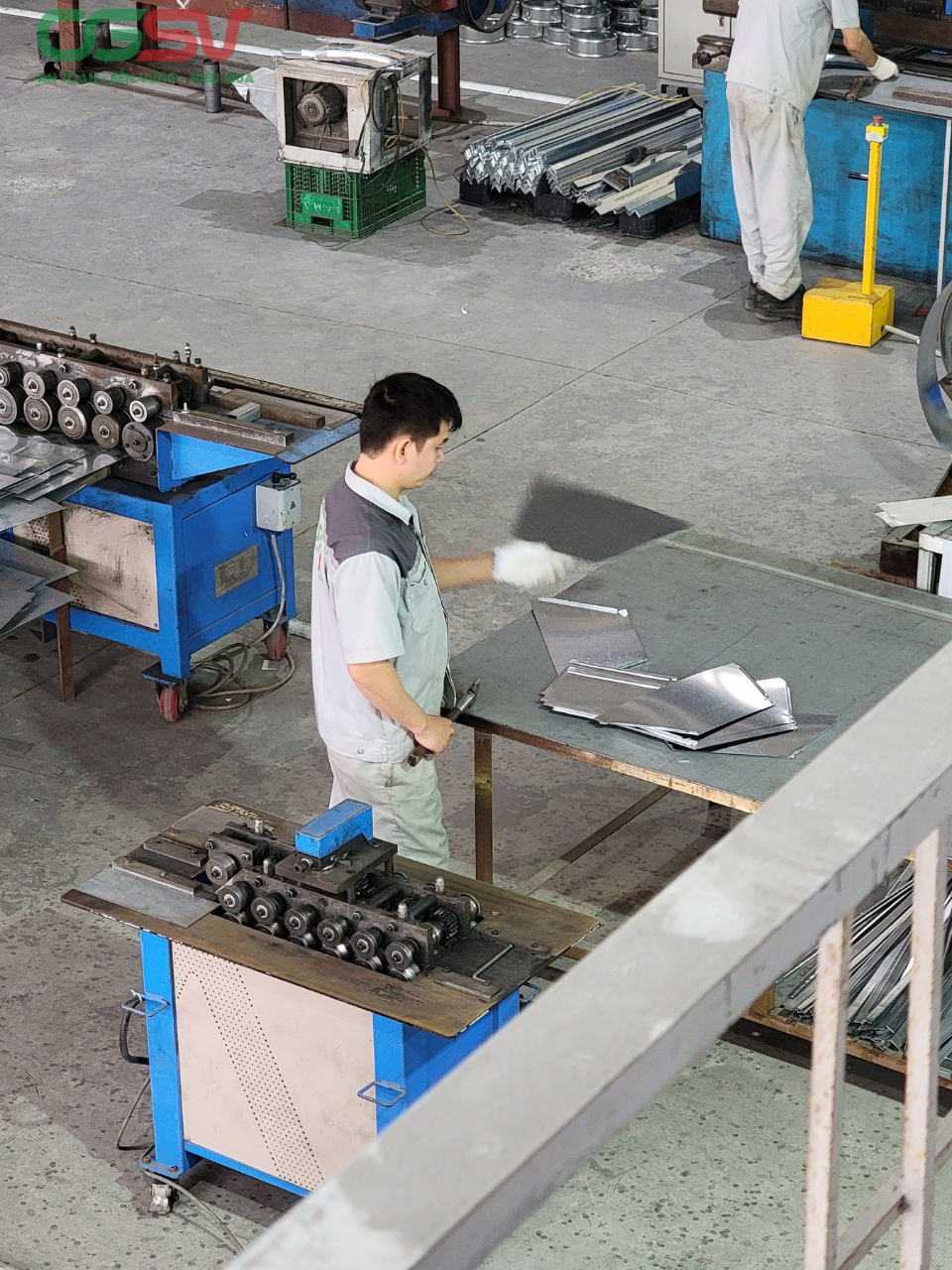
8. Checklist before finalizing the sheet metal thickness.
Before submitting the order, the contractor can perform a quick check:
- Do you have a specification yet?
- Have you determined the type of material yet?
- Has the thickness been determined yet?
- Do the dimensions on the Bill of Quantities match the drawings?
- Is reinforcement required?
- Have the linking specifications been agreed upon?
- Are there any specific requirements for each area?
- Have the QC/CO/CQ requirements been communicated?
- Has the manufacturer confirmed the scope of supply?
If any of the above points are unclear, they should be agreed upon before production begins.
9. Sao Viet Air Ducts – Information unified before production.
For projects HVAC, M&E, and Fire Protection, Providing complete drawings, BOQs, and technical specifications gives the manufacturing unit a basis for inspection and advice on suitable solutions.
When submitting the application to Sao Viet Air Duct, The contractor should provide:
- Drawings or shop drawings.
- BOQ/Statistical Table.
- Specification.
- Material type.
- Required thickness.
- Linking specifications.
- Reinforcement is required.
- Delivery schedule required.
- Request delivery and acceptance documents, if any.
Input normalization helps the process:
Business → Engineering → Production → QC → Delivery
Using the same information source minimizes the need for adjustments after production.
Conclusion
Sheet metal thickness is one of the important parameters when fabricating air ducts, but it should not be chosen in isolation.
The contractor needs to consider both simultaneously. Pipe size, pressure, reinforcement, joining method, project specifications and standards..
A clear set of input documents will lead to more transparent pricing, smoother production, and reduced on-site costs.
For projects that require Fabrication of air ducts according to drawings., Sao Viet Air Ducting can receive applications and provide advice on suitable production and supply solutions.
SAO VIET AIR DUCT MANUFACTURING AND TRADING COMPANY LIMITED
Address: 267 Le Thanh Tong, May Chai, Ngo Quyen, Hai Phong
Hotline: 0815.999.826 – 0934.559.168
E-mail: vietonggio@gmail.com