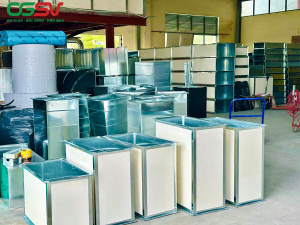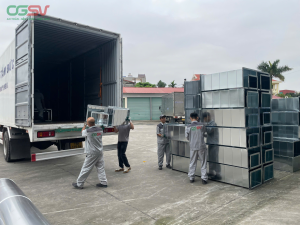
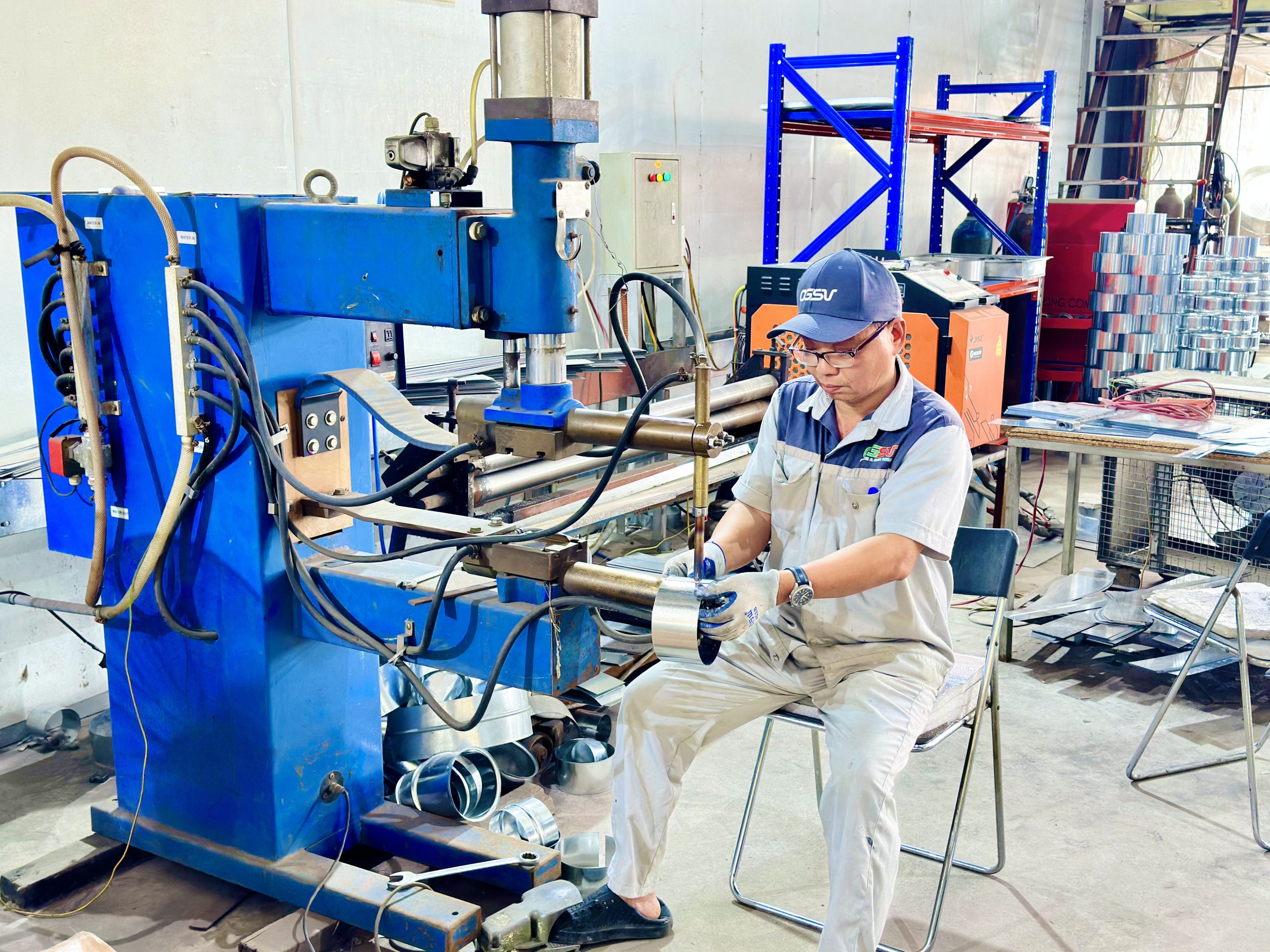
In ventilation and air conditioning systems, air leaks in ductwork are a fairly common problem, especially in factories, shopping malls, or large buildings. This not only reduces HVAC system efficiency but also causes energy loss and increases operating costs.
Timely detection and repair of air leaks in ductwork will help the system operate stably, ensure adequate airflow, and save energy.
1. What is an air leak in a duct system?
Air leakage is the phenomenon of air escaping through gaps, joints, or duct surfaces during system operation.
This phenomenon commonly occurs in locations such as:
- Joints between sections of air ducts
- Flange clearance
- Air vent installation location
- Bends, curves, or turns
- The location adjacent to the fan unit
If left untreated, air leaks can reduce the airflow supplied to the area of use, causing the system to operate inefficiently.
2. Causes of air leaks in duct systems
There are many causes of air leaks in ventilation systems, the most common of which are:
Improper construction techniques
Joints that are not tightened properly or do not use sealing material allow air to easily escape.
The quality of the air ducts is not guaranteed.
Air ducts with excessively thin sheet metal or poor workmanship can develop gaps after a period of use.
Incorrect installation
Improper placement of ductwork, flanges, or fittings also increases the risk of leaks.
Long-established operating system
After prolonged use, sealing materials such as gaskets or tapes can age and lose their effectiveness.
3. How to detect air leaks in duct systems
Before addressing the issue, it's necessary to accurately identify the location of the air leak in the system. Some commonly used methods include:
- Direct observation: inspect for gaps at joints or flanges.
- Use your hand to feel the airflow: locate where the wind is escaping.
- Use a pressure gauge or fume detector to check for leaks.
- Check for unusual noises in the pipes.
Regular inspections help detect problems early and minimize air leakage.
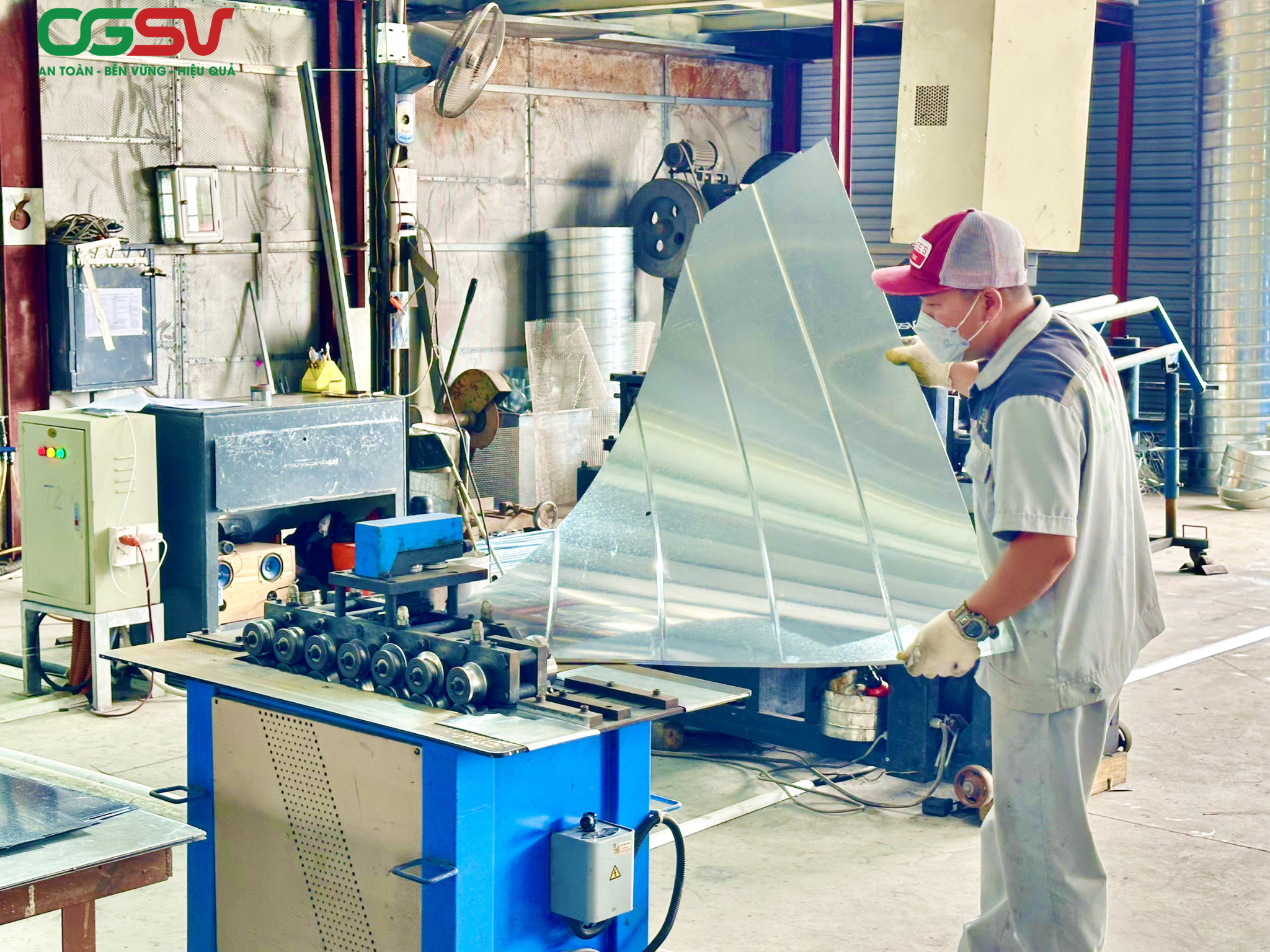
4. Effective ways to deal with air leaks
After locating the leak, the following solutions can be applied:
Use duct tape specifically designed for air ducts.
Aluminum foil tape or HVAC tape has high heat resistance and adhesion, making it ideal for sealing small gaps.
Use sealant.
Specialized sealants are commonly used at joints, flanges, or areas with large gaps.
Install the rubber gasket at the flange.
Rubber gaskets help increase airtightness between duct sections and reduce air leakage.
Reinforce the joints.
Tighten bolts and screws or replace damaged fittings to ensure a secure connection.
Replace the damaged section of ductwork.
In case the ductwork is deformed or punctured, the damaged section of duct must be replaced with a new one to ensure safety and system performance.
5. Solutions to prevent air leaks from the start.
To minimize air leakage in the system, attention should be paid right from the design and construction phases:
- Use air ducts manufactured to technical standards.
- Use TDF or TDC flanges to increase airtightness.
- Inspect all connections carefully before operating the system.
- Regular maintenance and inspection of the duct system.
These solutions not only help limit air leaks but also extend the lifespan of the ventilation system.
Conclude
Air leaks in duct systems are one of the causes of reduced efficiency in ventilation and air conditioning systems. Early detection and application of appropriate technical solutions will help the system operate stably, save energy, and ensure air quality in the building.
For large systems, choosing a reputable ductwork manufacturer and installer will help minimize leaks and improve long-term operational efficiency.