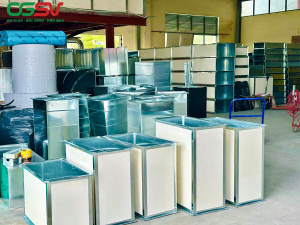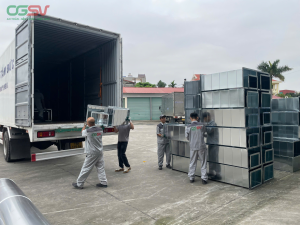

In industries requiring high precision and hygiene, such as pharmaceuticals, electronic components, or medical devices, cleanroom systems play a crucial role. One of the key factors determining the effectiveness of a cleanroom is its duct and vent system, which helps control airflow, remove dust, and maintain a standard-compliant environment.
The design and construction of cleanroom ductwork must adhere to numerous stringent technical standards to ensure that the production environment consistently meets the required cleanliness levels.
Cleanroom duct standards in HVAC systems
In cleanroom constructions, cleanroom duct systems must ensure high airtightness, smooth surfaces, and minimize dust generation during operation.
Some important standards include:
- Air duct materials commonly used include galvanized sheet metal or stainless steel with a smooth surface.
- The joints must be completely airtight, preventing any air leaks.
- Duct systems should minimize sharp bends and complex curves to reduce dust accumulation.
- The inside of the ductwork must be thoroughly cleaned before installation.
In addition, duct systems in cleanrooms often undergo leak testing to ensure they meet HVAC system technical standards for tightness.
Cleanroom air vent standards
Besides ductwork, cleanroom air vents are also important components that help distribute airflow evenly throughout the production space.
Common types of air vents used in cleanrooms include:
Air intake vents with HEPA filters
This type of air vent is common in pharmaceutical and electronics factories. HEPA filters remove ultrafine dust particles from the air before it enters the cleanroom.
Advantage:
- Effective dust filtration up to 99,97% for particles as small as 0.3 microns.
- Helps maintain cleanliness levels according to cleanroom standards.
- Even air flow distribution
Return air vents and exhaust air vents
The return air vents are responsible for collecting air from the cleanroom and returning it to the treatment system.
The following criteria must be met:
- The air vent surface is easy to clean and resistant to dust accumulation.
- The design avoids dead spaces where dust can accumulate.
- It can be easily disassembled for maintenance.
Standards for installing duct systems in cleanrooms.
The construction process for cleanroom duct systems must follow strict procedures to avoid contamination.
Some important requirements:
- The air duct must be sealed at both ends during transportation.
- The installation area must be clean before construction begins.
- Construction workers must adhere to cleanroom hygiene procedures.
- The system needs to be inspected and cleaned before operation.
The role of duct systems in cleanrooms
A standard cleanroom duct and air vent system offers numerous benefits to a manufacturing plant:
- Maintain a clean and stable air environment.
- Limit dust and microbial contamination.
- Ensuring product quality in the pharmaceutical and electronics industries.
- Improve the operational efficiency of your HVAC system.
As a result, cleanrooms can meet the stringent standards of modern industrial production.

Conclude
The design and construction of cleanroom ductwork must adhere to strict technical standards to ensure a high level of cleanliness in the production environment. Factors such as duct tightness, air outlet quality, HEPA filtration systems, and installation procedures all play a crucial role in the operational efficiency of the cleanroom.
For pharmaceutical and electronics manufacturing plants, investing in a standard cleanroom duct system is crucial to ensuring product quality and meeting international standards.