In the food manufacturing and processing industry, hygiene and safety standards are crucial factors determining product quality and business reputation. To achieve international certifications such as ISO 22000, HACCP, or GMP, factories need to control not only raw materials and water sources but also pay special attention to air quality.
In this context, designing and maintaining a clean air duct system within the HVAC system of a food processing plant plays a core role, directly preventing the risk of microbial contamination from above.
1. Risk of Infection from Poor Quality Piping Systems
Conventional ventilation systems, after a period of operation, will accumulate a certain amount of fine dust inside the ducts. In a food processing plant environment – where humidity is often high and organic molecules are present in the air – these air ducts easily become ideal breeding grounds for bacteria, mold, and spores.
When the fan operates at high pressure, mold spores and bacteria adhering to the duct walls are blown away by the airflow, directly dispersing onto the packaging line, food surfaces, or raw processing areas. This increases the risk of cross-contamination, causing food to spoil quickly, deteriorate, reduce shelf life, and, more seriously, lead to mass food poisoning incidents causing significant losses for businesses.
2. Material Standards for Air Ducts in the Food Industry
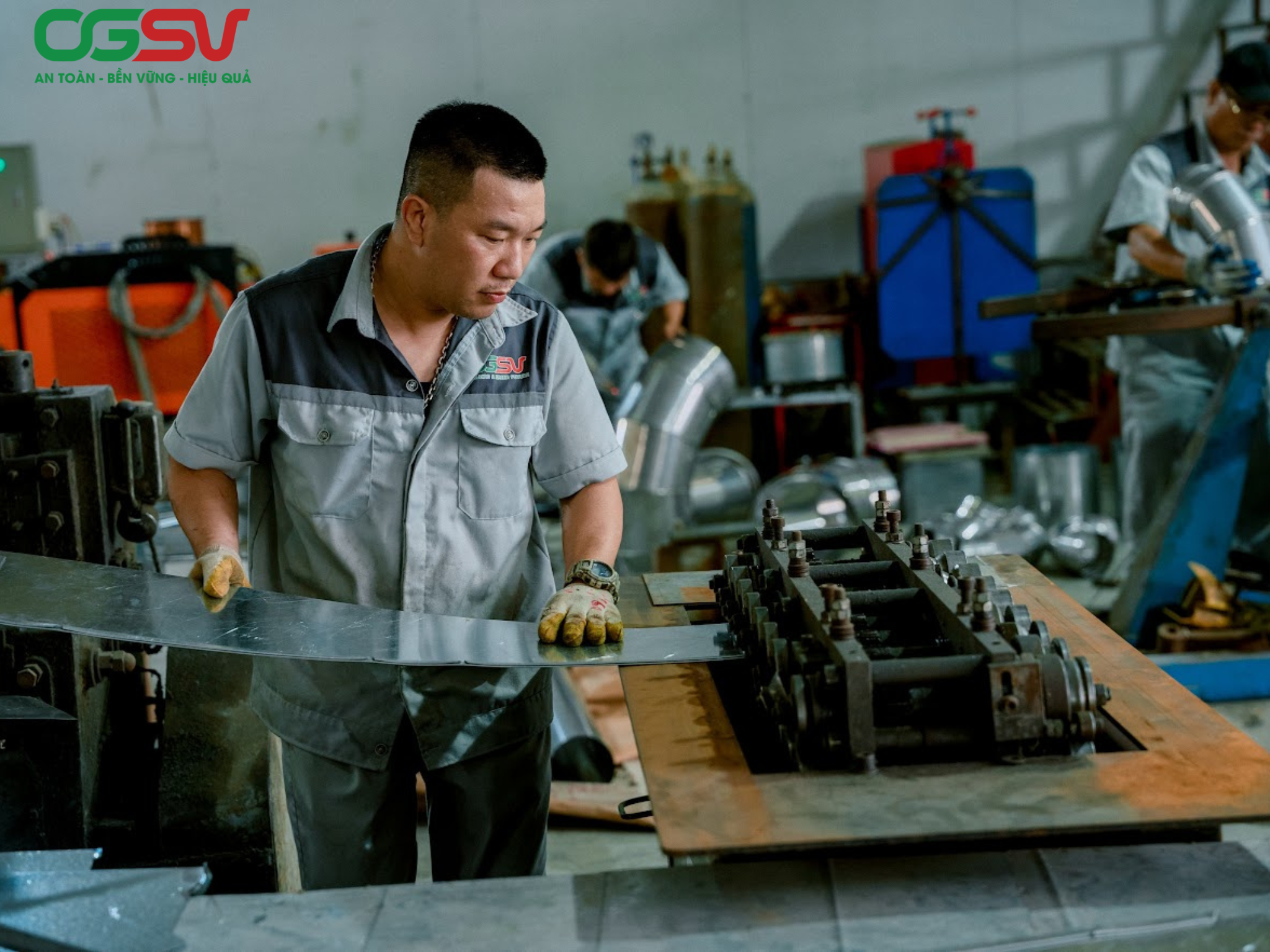
To thoroughly address the problem of airborne contamination, the selection of materials for food industry air ducts must comply with strict mechanical and chemical regulations.
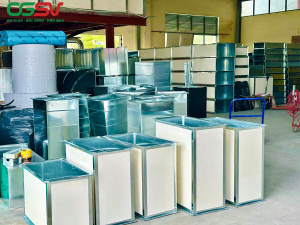
- Stainless steel (304): This is the preferred material for areas in direct contact with or directly above processing lines. 304 stainless steel has a super-smooth surface, is not oxidized by high humidity, and is highly resistant to strong cleaning and disinfecting chemicals during routine cleaning.
- High-grade galvanized steel: For auxiliary areas such as packaging storage and protective rooms, contractors may use thick galvanized steel. However, the joints must be treated with a specialized antibacterial sealant for HVAC systems, which is odorless and does not decompose over time.
- Eliminate condensation with closed-cell insulation: The pipe insulation layer must use closed-cell vulcanized rubber; fiberglass, which easily releases toxic fibers, should absolutely not be used. This insulation layer prevents condensation on the outer walls, completely eliminating the breeding ground for mold on the factory ceiling.
Classification of Air Quality Standards in Food Processing Plants
| Production Area | HVAC System Pressure Requirements | Suitable Duct Material Types |
| Packaging and sterile room | Absolute positive pressure (+) | 304 stainless steel |
| Heat processing and cooking area | Average positive (+) pressure | 304 stainless steel or high-grade galvanized steel |
| Raw material receiving area | Negative pressure (-) or equilibrium | Standard galvanized steel sheets |
3. Design the pipeline layout to facilitate regular cleaning.
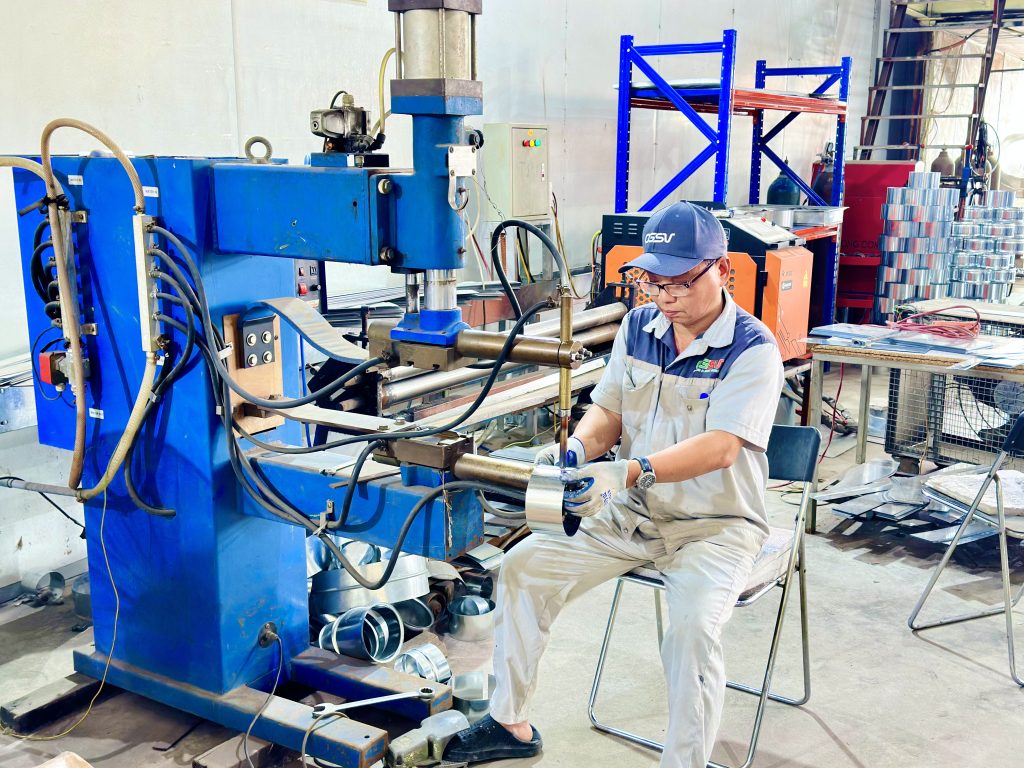
A food processing plant's HVAC system is considered comprehensive if it can perform mechanical cleaning (duct cleaning) after certain operating cycles.
- Installation of ceiling access doors and duct access doors: On long horizontal ductwork, contractors are required to install hinged access doors with sealed rubber gaskets. These doors allow maintenance personnel to easily insert robots or disinfection spray equipment inside the ducts to clean away accumulated dirt and grease.
- Minimize dead corners and sharp bends: The transition sections of air ducts in the food industry need to be designed with smooth curves and large radii. This helps reduce pressure loss and prevents turbulent airflow that creates areas of static dust accumulation inside the duct.
Conclusion
Investing in a clean air duct system that meets standards for a food processing plant is not simply about completing the building's technical aspects; it's a crucial barrier protecting product quality and the lifeblood of the business. Choosing the right materials and the right contractor from the outset will help the plant easily pass actual hygiene and safety inspections.
If your company is looking for a solution to supply standard-compliant materials or needs advice on clean pipeline construction for your factory, contact Sao Viet immediately to receive support from our most experienced engineers!
>>> See more: Get free technical advice and a quote!
If you are looking for a reliable ducting supplier that guarantees safety, durability, and efficiency for your project in Hai Phong and surrounding provinces, please contact us immediately:
Address: 267 Le Thanh Tong, May Chai, Hai Phong
Mrs. Hang: 0815.999.826
Mrs Giang: 0934.559.168
E-mail: vietonggio@gmail.com