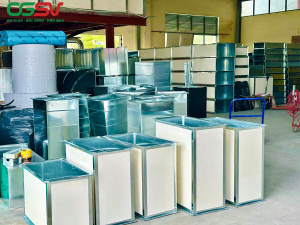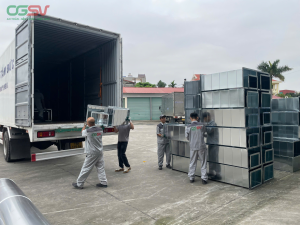
In current civil and industrial construction projects, Fire safety standards for duct systems This is a mandatory requirement during design, construction, and acceptance testing. The duct system not only serves the purpose of ventilation and air conditioning but is also directly related to... fire safety and evacuation. Failure to comply with fire safety standards can lead to serious risks and render a building unfit for use.
1. The role of duct systems in fire prevention and control.
When a fire occurs, smoke and toxic gases are the greatest dangers to human life. Fire protection duct system Its duties include:
- Remove smoke and toxic gases from the fire area.
- Prevent smoke from spreading to other areas.
- Assist in creating pressure for the emergency exit.
Especially in the basement, corridors, and emergency stairwells, smoke exhaust duct system It plays a crucial role in ensuring safety and minimizing damage.
2. Mandatory fire safety standards applicable to duct systems.

According to current regulations, the duct system in a building must meet the following basic requirements:
2.1. Duct Materials
- Air ducts must be manufactured from materials. Non-flammable or difficult to burn, Commonly used materials include galvanized steel, steel, and stainless steel.
- For areas with high demands, the following is required: EI fireproof duct according to the specified fire resistance time (EI30, EI60, EI90…).
2.2. Heat resistance and flame retardancy
- The fire protection duct system must ensure No deformation, no collapse. during the standard fire duration.
- Joints, flanges, and gaskets must be leak-proof.
3. Fire fighting dampers and associated equipment
An integral part of the system is fire fighting air damper:
- Fire dampers and smoke dampers must automatically close when the temperature exceeds the permissible limit.
- Ventilation dampers must be installed correctly at points where they penetrate walls, floors, or fire compartments.
Incorrect installation or absence of fire dampers can cause smoke and fire to spread rapidly, leading to a loss of fire control.
4. Requirements for installation and construction of fire protection duct systems.
The duct system needs to be:
- Install according to the approved fire safety design drawings.
- Arrange the supports and pipe hangers to ensure they can withstand the pressure when the temperature rises.
- Through walls and floors, all penetrations must be sealed with fire-resistant materials that meet standards.
Besides, smoke exhaust duct system Its ability to operate independently in an emergency needs to be tested.
5. Inspection, acceptance testing, and maintenance according to fire safety standards.
After installation, the duct system must:
- Inspected and tested as required by the fire safety authority.
- Only after passing the acceptance test will the equipment be put into use.
During operation, the investor needs to:
- Regular maintenance of fire protection duct and damper systems.
- Ensure the system is always ready to operate in the event of a fire or explosion.
Conclude
Follow Fire safety standards for duct systems It is not only a legal requirement but also a crucial factor in protecting people and property. The choice... A manufacturer and installer of fire protection ductwork that meets standards. This will help ensure the project is approved and accepted smoothly, and operates safely in the long term.