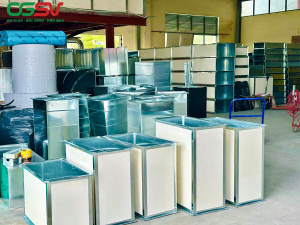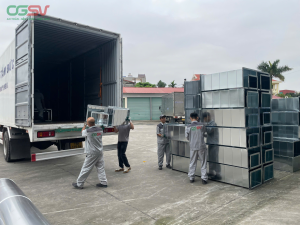
In all construction projects, from factories and shopping malls to high-rise apartment buildings, the HVAC (Heating, Ventilation, and Air Conditioning) system acts as the "lungs" that regulate the air. For the system to operate smoothly and efficiently, the ductwork installation process must be extremely rigorous and technically sound.
At Sao Viet Ducting Company, we apply a standard 5-step process to ensure the quality of our projects and timely delivery to our customers.
1. Site preparation and survey
Before starting installation, a site survey is mandatory to avoid deviations from the design drawings.
- Survey: The engineering team inspected the intersections with the electrical, water, and fire protection systems to avoid spatial conflicts.
- Prepare the materials: Gather various types of air ducts (square ducts, spiral ducts), accessories (elbows, bends, fire dampers), insulation materials, and support fittings (threaded rods, expansion anchors).
- Quality control: All products leaving the factory must meet the specified thickness standards for galvanized steel or stainless steel as per the contract.
2. Mark and install the suspension support system.
This is the stage where the air duct "path" is defined on the ceiling or along the walls.
- Determine the location: Technicians use a laser marking device to mark the installation positions for threaded rods and brackets. This ensures that the duct sections will be aligned and not sag after installation.
- Install the bracket: The spacing between the supports must comply with technical standards (usually 2m – 3m depending on pipe size) to withstand the weight of the entire system and vibrations during operation.
3. Install duct sections and fittings.
This is the most important step in air duct installation process, requiring meticulousness from the craftsman.
- Pipe connection: Depending on the type of pipe, TDF flanges, V-flanges, or C-clamps are used for connection. At the joints, technicians are required to apply rubber gaskets to ensure a completely airtight seal.
- Install accessories: Devices such as flow control valves (VCDs), fire dampers (FDs), and air boxes are properly positioned for convenient future maintenance.
- Install the air vents: The final step in the structural work is installing the air vents (louvers, diffusers) aesthetically and in the correct airflow direction.
4. Insulate and seal the joints.
For air conditioning (cold air) duct systems, insulation is mandatory to prevent condensation.
- Material: Fiberglass or vulcanized rubber with a silver backing is commonly used.
- Request: The insulation layer must completely cover the entire pipe, and the joints must be sealed with specialized silver tape to prevent humid air from coming into contact with the iron pipe surface.
5. Inspection, trial operation, and handover
After installation is complete, the system will undergo final testing:
- Leak test: Check for gas leaks at joints using traditional methods or a pressure gauge.
- Trial run: Connect the ductwork to a fan or central air conditioner to check for vibration, noise, and airflow at each vent.
- Acceptance testing: Clean the entire system and hand over the completion documents to the investor.
Why choose our manufacturing and construction services?
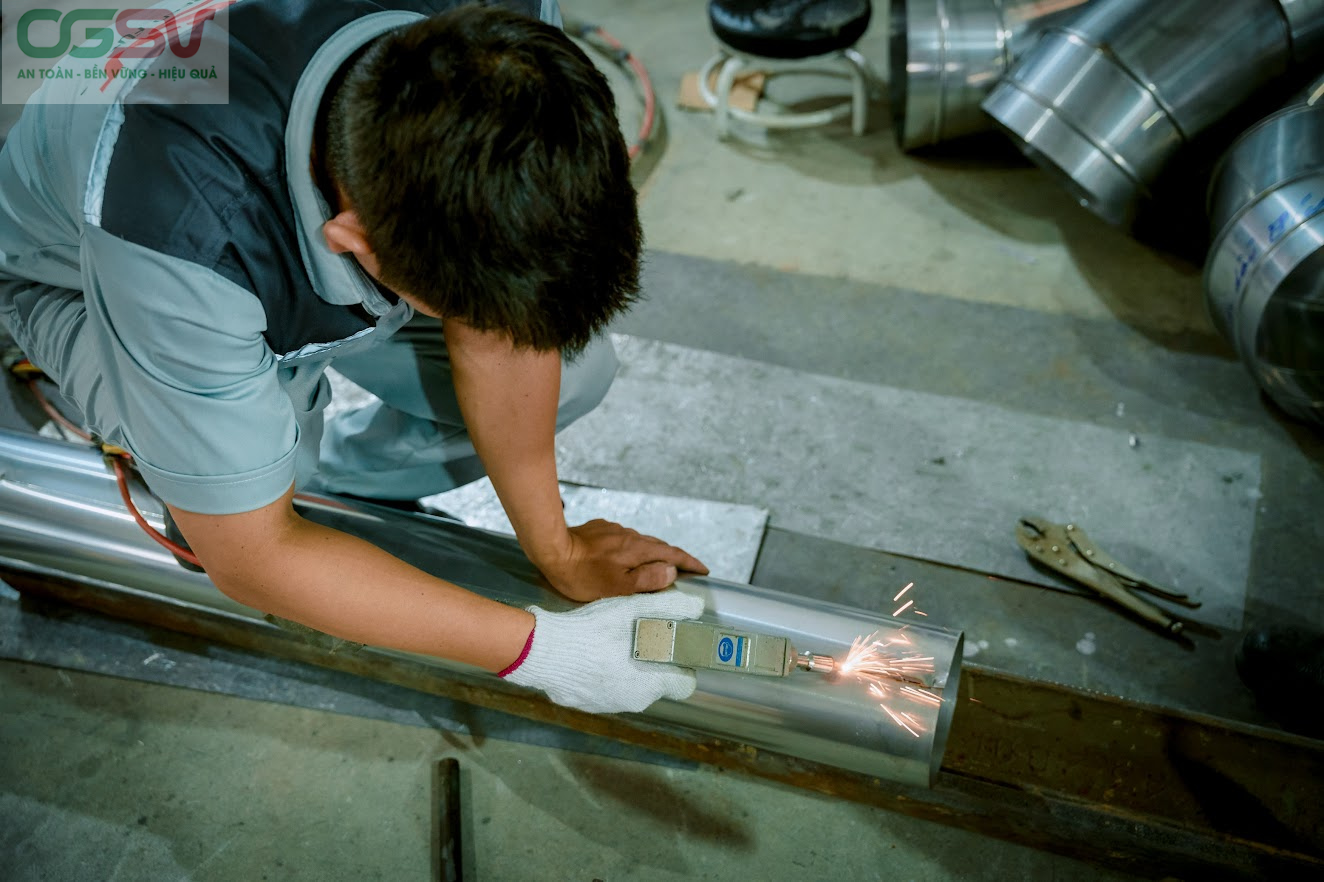
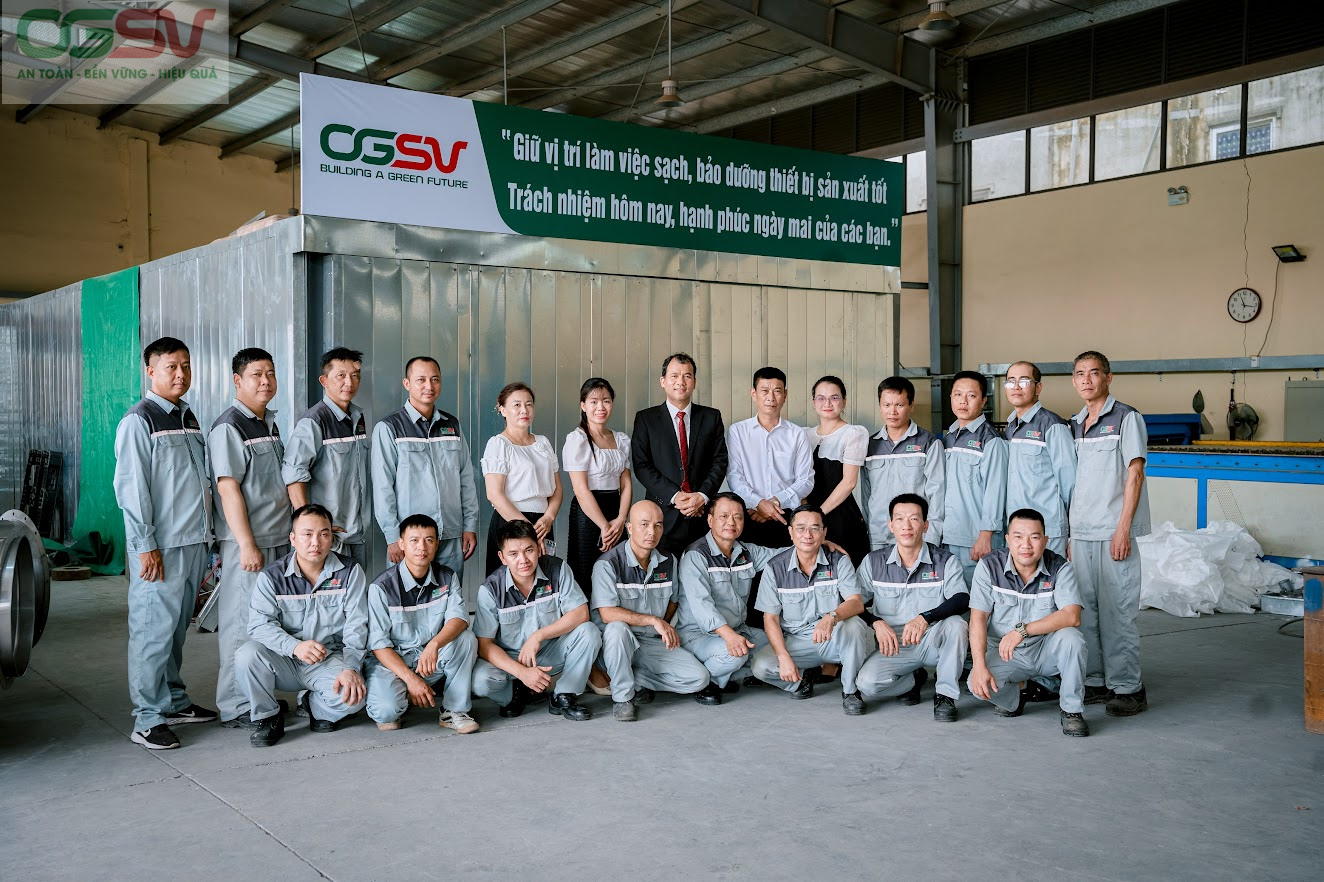
With a modern automated machinery system and a team of experienced workers, Sao Viet Ducting Company commit:
- Progress: Construction was completed quickly and as promised.
- Quality: The ductwork products meet ISO standards, with absolutely tight-fitting joints.
- Expense: Factory direct pricing, no middlemen.